
Employee Dining Trends Shaping Better Offices
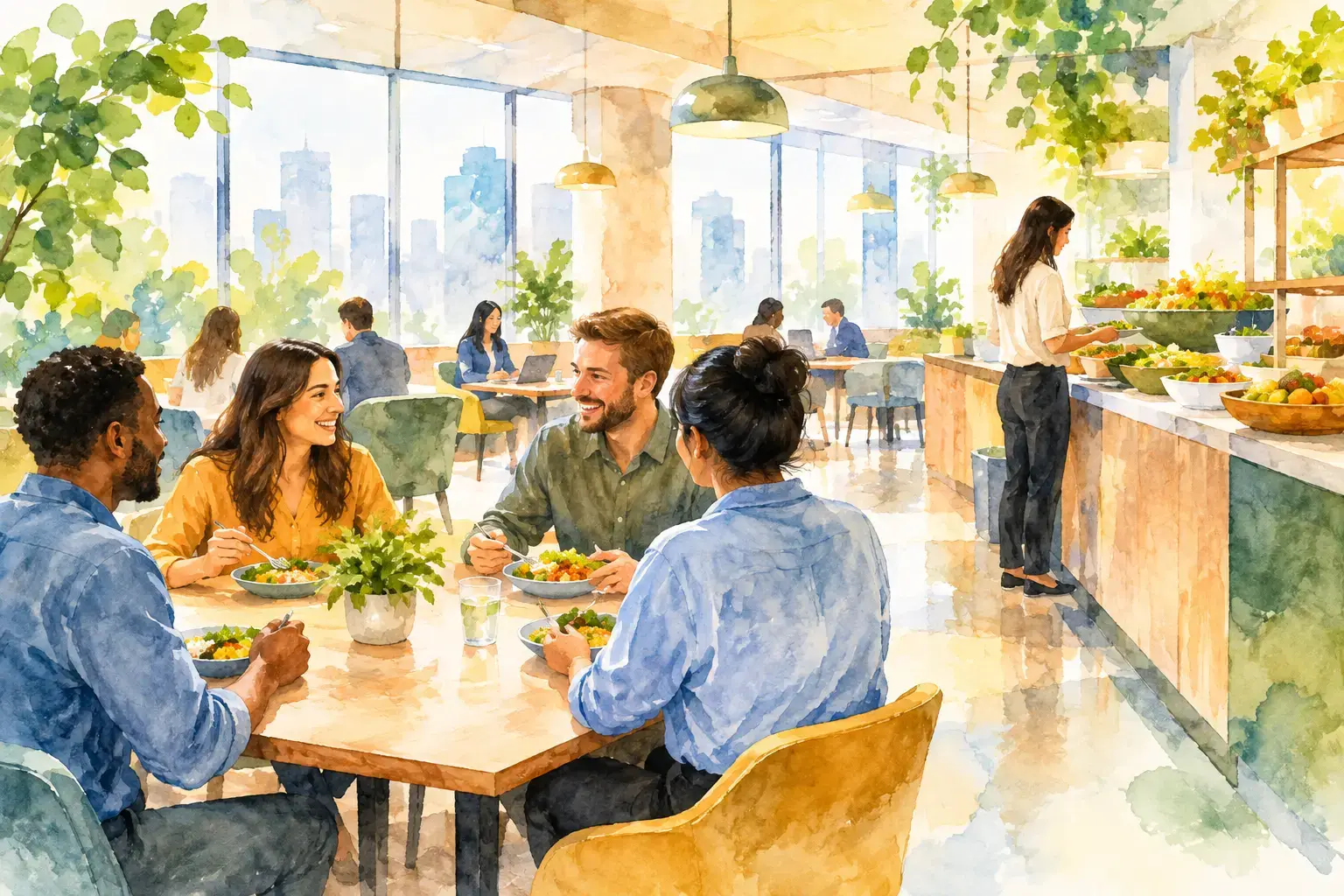
A Tuesday lunch can say more about a workplace than a carefully worded culture deck. When people return to the office for collaboration, connection and momentum, the food on offer matters. The most meaningful employee dining trends are not about adding another perk. They are about making time together feel worth the commute.
For London employers, that means moving beyond the predictable sandwich platter or a once-a-quarter pizza delivery. Teams have varied tastes, dietary needs and reasons for gathering. Food needs to meet that reality while still being simple to plan, easy to budget and arriving when it is meant to.
Employee dining trends are becoming more flexible
The fixed, five-day office lunch programme suits some businesses, particularly those with consistently busy offices. But hybrid working has changed the rhythm of the week. Many workplaces now see their highest attendance from Tuesday to Thursday, with team days, workshops and client meetings creating peaks in demand.
That has made flexibility a priority. Rather than paying for food that does not match attendance, workplace teams are building a mix of recurring meals and ad-hoc orders. A regular Wednesday lunch may give people something to look forward to, while breakfast for a strategy session, sharing platters for a pitch or a celebratory spread after a company milestone can be booked around the moments that matter.
The practical point is not to treat every day alike. Review attendance patterns, meeting schedules and team preferences before deciding whether a regular meal plan, flexible ordering or a combination will work best. Predictability has value, but so does the freedom to respond to a changing office week.
Food is part of the reason to come together
The office is no longer simply where people sit at desks. For many teams, it is the place for decisions that are easier face to face, informal mentoring and the conversations that do not fit neatly into a video call. Good food supports those moments because it creates a natural pause in the day.
This does not mean employers need to turn lunch into a forced social event. Some colleagues will want to catch up; others will prefer to eat quietly and reset. The better approach is to provide food that gives people choice and removes friction. A varied lunch spread lets colleagues eat in the way that suits them, while still making the shared day feel more considered.
There is also a difference between food that merely fills a gap and food people genuinely talk about. An interesting Middle Eastern feast, vibrant seasonal salads, proper curries, bakery-fresh breakfast pastries or generous sharing plates can give a team day its own character. No generic menus or bland food is not just a nice idea. It is what turns a functional order into a workplace experience people remember.
Independent Makers are replacing generic catering
One of the clearest shifts in employee dining is a higher expectation of quality. Employees are used to choice outside work: neighbourhood restaurants, specialist bakeries and food from every corner of London. Corporate catering that feels detached from that standard can quickly feel like an afterthought.
That is why maker-led food is gaining ground. Independent kitchens bring identity, regional knowledge and care to the menu, whether they are preparing Persian rice dishes, bold Caribbean flavours, fresh Mediterranean sharing food or beautifully made cakes. It also gives workplace organisers more variety without having to source and manage a long list of suppliers themselves.
There is a trade-off to manage. Variety cannot come at the expense of reliability. For a 9am board breakfast or a 1pm client lunch, a late delivery undermines the whole occasion, however good the food may be. The strongest workplace catering model combines restaurant-standard food from independent Makers, not soulless kitchens, with defined delivery windows, clear communication and one organised point of contact.
Inclusive menus need to be planned, not patched on
Dietary inclusion has moved well beyond adding one vegan option to an otherwise unsuitable buffet. Teams may include people who are vegetarian, vegan, halal, gluten-free, dairy-free or managing allergies. Just as importantly, colleagues should not have to explain or defend their food needs every time lunch is ordered.
The best orders are inclusive from the outset. That can mean choosing a menu where plant-led dishes are genuinely appealing to everyone, clearly labelling ingredients and ensuring adequate portions for each dietary requirement. It is usually better to order a balanced selection of dishes than create a separate, lesser meal for a small group.
This requires useful information at the point of ordering. Organisers need confidence about ingredients, allergens, portions and suitability before food arrives. It also depends on collecting preferences carefully, especially for recurring team meals where new starters and changing requirements can otherwise be missed.
A little planning protects the experience for everyone. Asking for dietary information before a major event, keeping a current team preference list and choosing suppliers that can accommodate clear requirements will prevent last-minute scrambles.
Breakfast and afternoon food are getting more attention
Lunch remains the centrepiece of many office food programmes, but it is not the only moment that counts. Breakfast is increasingly used to start town halls, training days and early client sessions on the right note. Good coffee, fresh pastries, fruit and savoury options can make an 8.30am arrival feel considerably more welcoming.
Afternoon food is also finding its place. A well-timed cake delivery, a snack table or lighter sharing food can help sustain a workshop without the formality or cost of a full meal. It works especially well for all-hands meetings, creative sessions and team celebrations.
The key is to match the format to the purpose. Boxed meals make sense when attendees need to eat quickly between sessions or travel onwards. Sharing platters encourage conversation. A buffet offers range for larger groups. Plated dishes can suit a more formal client occasion. There is no single best format, only the one that makes the day run smoothly.
Budget control is still non-negotiable
A better food experience does not require vague pricing or unnecessary admin. Workplace teams are under pressure to show value, particularly when food spending comes from people, facilities or events budgets. They need to know the cost before they confirm an order and they need invoices that are straightforward to reconcile.
Fixed pricing, transparent minimum spends and sensible portion guidance make a major difference. So does a central ordering process that avoids several people placing separate orders, chasing receipts or answering delivery calls. The more complicated catering becomes behind the scenes, the less likely it is to become a sustainable part of workplace culture.
For large recurring programmes, account support can help with menu planning, attendance changes and reporting. For a one-off team lunch, self-serve ordering may be all that is needed. The right level of service depends on order frequency, group size and how much coordination the organiser is already carrying.
Employee dining trends need operational follow-through
The most exciting menu is only as good as the delivery behind it. Reception access, lift restrictions, security procedures, room set-up, serving times and collection of equipment can all affect whether food arrives ready to enjoy. These details are easy to overlook until a delivery is waiting downstairs while a client meeting has already begun.
Build a short catering brief for recurring orders and events. Include the delivery contact, exact location, timing, number of guests, dietary requirements, set-up needs and whether plates, cutlery or serving equipment are required. For major occasions, confirm the details in advance and allow enough time for food to be laid out properly.
This is where a managed platform such as &Dine can make the process feel considerably lighter: independent food businesses are curated, while the ordering, delivery and account support remain organised for the workplace. Great food should not create a new logistics project for an office manager.
Make the next meal useful, not just generous
Start with one question: what is this food meant to do? It might welcome new hires, reward a busy team, support a full-day workshop or make a client feel well hosted. Once the purpose is clear, the menu, format and budget become easier to choose.
Then listen. Ask colleagues what they enjoyed, what did not travel well and what they would like to see next time. The most successful office food programmes are not built around assumptions. They are built meal by meal, with good taste, practical detail and genuine consideration for the people sharing the table.