
Independent Kitchens Versus Central Kitchens
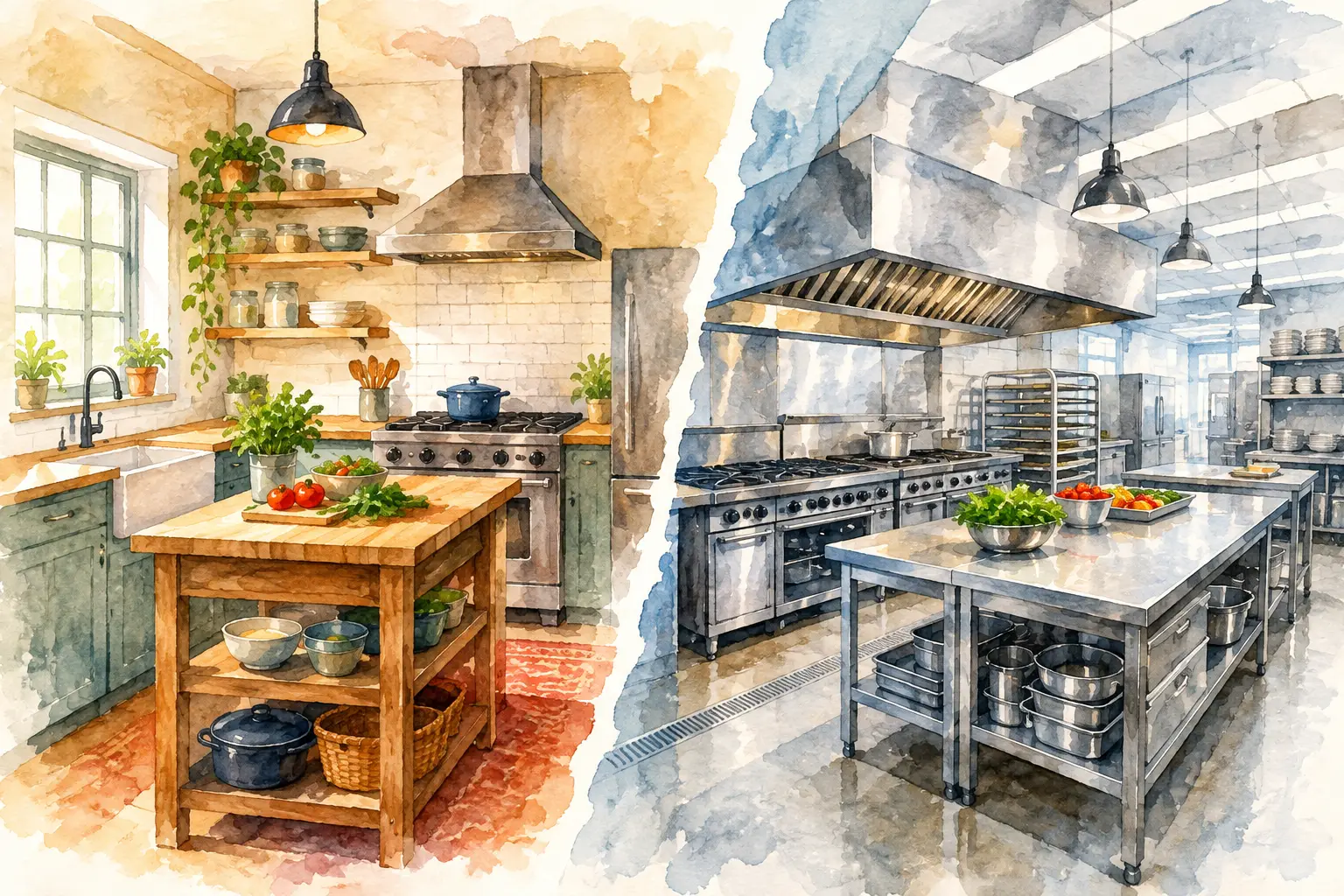
A team lunch can look polished on the order form and still fall flat at the table. The real difference often comes down to how the food is made. In the debate around independent kitchens versus central kitchens, workplace teams are weighing more than menus: they are choosing between scale-led production and food with a clearer sense of craft, freshness and character.
For office managers, EAs and workplace teams, this is not an abstract catering question. It affects whether colleagues look forward to lunch, whether dietary needs are handled thoughtfully, and whether a client event feels considered rather than copied and pasted from last week's buffet.
What is the difference?
A central kitchen prepares food in one large production site, often producing meals for numerous locations. Food may then be portioned, chilled, transported and finished or reheated closer to delivery. This model is common in traditional corporate catering because it is designed for volume, standardisation and tightly controlled production.
Independent kitchens are separate food businesses, usually built around their own chefs, cuisines and ways of cooking. One Maker might be known for vibrant Mediterranean sharing dishes, another for carefully balanced Japanese-inspired bowls, and another for generous bakery breakfasts. Food is prepared by the people behind that menu, rather than being produced as one line in a broad central catalogue.
Neither approach is automatically right for every order. A central kitchen can be a sensible choice where a highly standardised, very large-scale service is the priority. Independent kitchens tend to shine when quality, variety and the experience around food matter just as much as getting meals from A to B.
Independent kitchens versus central kitchens: the key trade-offs
Food quality and freshness
Central kitchens bring process discipline. Recipes can be measured precisely, ingredients can be bought at scale and production teams can repeat the same menu across many sites. For organisations that need identical food at very high volumes, that predictability has value.
The compromise can be felt in the food itself. Dishes that travel long distances or spend time chilled before service are less forgiving. Crisp elements soften, herbs lose their lift and hot food can become a little tired by the time it reaches the meeting room. A menu built to survive production and transport is not always a menu built to taste its best at lunchtime.
Independent kitchens generally cook closer to the character of the dish. A Maker specialising in curry, seasonal salads or fresh pastries has a strong reason to protect the details that make regular customers come back. That can mean brighter flavour, better texture and food that feels made for eating, not just for distribution.
This does not mean every small kitchen is suitable for workplace catering. The right partner needs food safety standards, reliable packaging, clear allergen information and the capacity to deliver consistently. Quality is not simply about being independent. It comes from selecting independent kitchens that can meet professional expectations every time.
Menu variety without generic food
A central kitchen usually works from a limited master menu. That simplifies procurement and training, but it can also make workplace food feel repetitive. If every breakfast pastry box, sandwich platter and hot buffet follows the same formula, people notice.
Independent food Makers bring a more natural breadth of choice. Their menus reflect specialist knowledge, family recipes, local ingredients and cuisines they genuinely care about. For a workplace, that makes it easier to rotate lunches, plan food around a theme or choose something that suits the people actually attending.
Variety is especially useful in London offices, where teams are often culturally mixed and used to good food. A plain chicken wrap and a tray of brownies may cover the basics, but they rarely make people feel looked after. A well-chosen spread of colourful salads, warm mains, thoughtful plant-based dishes and proper sweet treats can change the mood of an ordinary working day.
There is a practical limit, though. Too much choice can create admin. Asking an organiser to contact several kitchens, compare minimum spends, gather allergen details and chase delivery updates is not a better experience. The strongest model gives teams access to independent menus while keeping ordering, invoicing and delivery management in one place.
Dietary needs and inclusive planning
Dietary requirements are where generic menus are most likely to disappoint. A centralised catalogue may offer vegetarian, vegan and gluten-free options, but those choices can feel like afterthoughts: a substitute salad, a separate sandwich or a dish that nobody else would choose voluntarily.
Independent kitchens can offer more considered alternatives because many specialise in food traditions where plant-led dishes, naturally dairy-free recipes or ingredient-led cooking are already central to the menu. The result is less about finding a workaround and more about serving food everyone is pleased to eat.
That said, inclusion needs more than good intentions. Organisers should still confirm allergens, avoid assumptions about cross-contamination and make sure dietary dishes are clearly labelled on arrival. For larger meetings, it is worth checking requirements in advance rather than relying on a last-minute headcount. Great catering feels generous when nobody has to ask whether there is anything for them.
Reliability, timing and accountability
This is the reason many businesses have historically stayed with central kitchens. One supplier, one invoice and one operational process can feel lower-risk, particularly for a board lunch, a major pitch or an event with hundreds of guests.
But centralisation alone does not guarantee a good delivery. A delayed vehicle, an over-stretched production team or a poor handover can affect every order travelling from that site. When food is generic as well as late, there is very little to rescue the experience.
Independent kitchens need a dependable layer around them. That means vetted suppliers, defined delivery windows, clear ownership when something changes and a team that can coordinate food from different Makers without passing problems back to the customer. &Dine is built around that balance: restaurant-standard food from independent kitchens, with the fixed pricing, centralised ordering and account support workplaces need.
For ad-hoc team lunches, a straightforward online order and a clear delivery time may be all that is needed. For recurring meals, regular menu planning and a named account contact can remove repeated decision-making. For events, the operational detail becomes more important still: serving format, guest flow, set-up time, dietary labels and contingency planning all need to be agreed before the food arrives.
Cost is more than the price per head
Central kitchens can often quote an attractive base price because they buy ingredients in bulk and design menus around efficient production. If the brief is simply to feed a large group as economically as possible, that can be compelling.
Yet the cheapest headline price is not always the lowest-cost decision. Consider the organiser's time, the likelihood of food being wasted, the need to order extras because the menu is uninspiring, and the impression made on employees or guests. A lunch that arrives on time, tastes great and suits the room can be better value even if it costs a little more per person.
Independent kitchens also vary in price. A specialist menu with premium ingredients may not suit every regular lunch budget, while a generous, well-planned sharing menu may offer excellent value for a team event. The useful question is not whether independent food is cheaper or more expensive. It is whether the menu, portioning and service level match the occasion.
Fixed pricing helps here. It allows organisers to set a realistic spend per person, choose the right format and avoid awkward surprises after delivery. For regular workplace food, a planned rotation can also balance more indulgent days with lighter, lower-cost options.
Choose the model around the moment
For a high-volume, highly uniform requirement, a central kitchen may be the practical answer. If a company needs thousands of near-identical meals with limited menu variation, its scale can be useful.
For most workplace occasions, however, the brief is more human. Teams want food that makes a Tuesday lunch feel less routine. Candidates should see a welcome spread on their interview day. Clients should be offered something with more personality than a standard buffet. Colleagues with different diets should be included without being singled out.
That is where independent kitchens offer a meaningful advantage, provided the logistics are properly managed. The food can have a point of view without the organiser having to manage a dozen suppliers. It can be memorable without becoming complicated.
When planning your next order, start with the people in the room rather than the most familiar catering format. Ask what would make them feel considered, set a clear budget and give yourself enough lead time to choose food worth gathering around.