
A Workplace Lunch Programme Example That Works
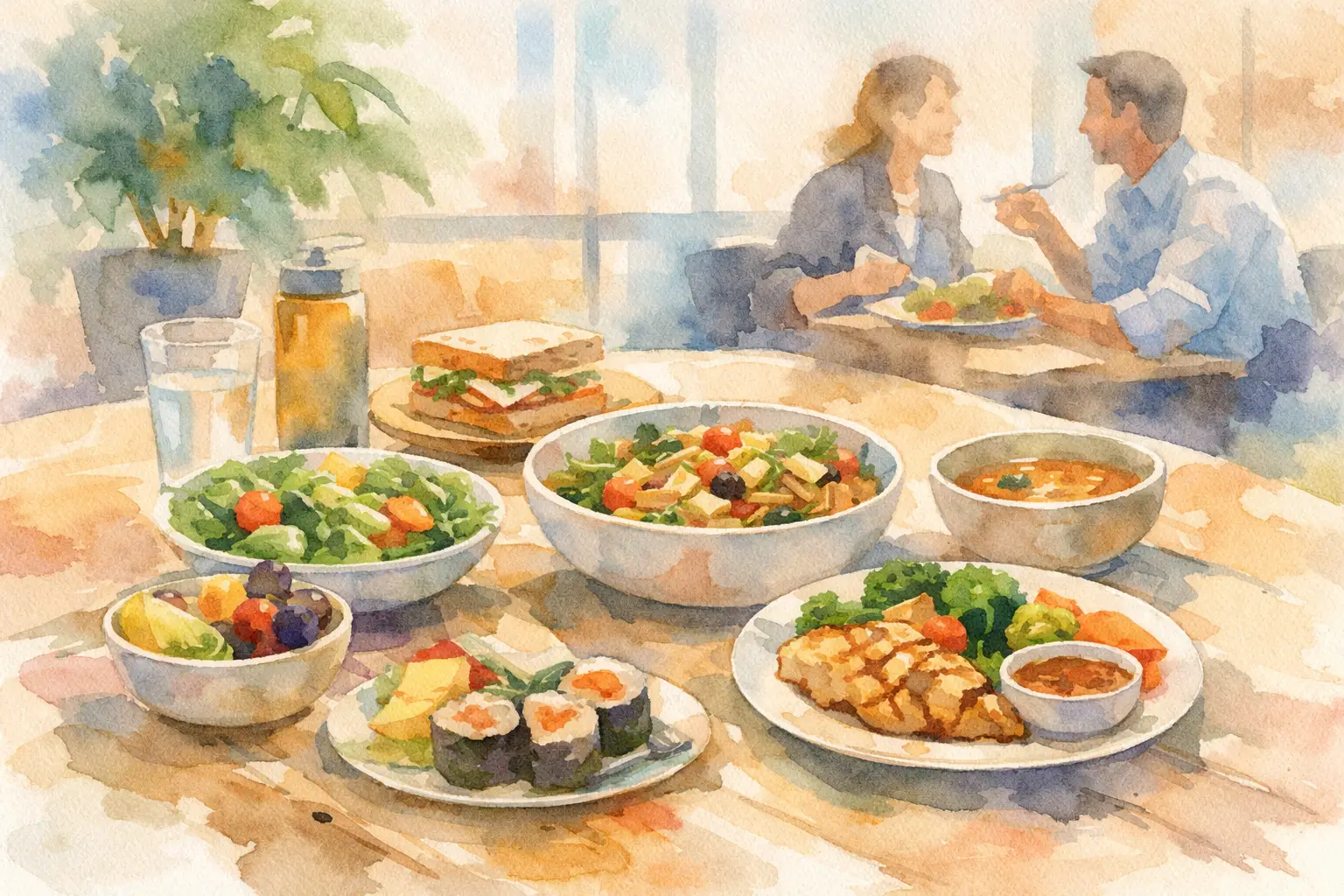
A good workplace lunch programme example is not a weekly pile of sandwiches left at reception. It is a reliable rhythm of food that gives people a proper reason to pause together, while making life easier for the person responsible for ordering it. For a growing London office, that can mean vibrant shared lunches twice a week, clear dietary information, dependable delivery windows and one simple monthly invoice.
The difference matters. When lunch feels like an afterthought, people opt out, dietary requirements become a last-minute scramble and the organiser spends too much time chasing suppliers. When it is planned well, workplace food supports the culture you want people to experience: considered, inclusive and worth showing up for.
A workplace lunch programme example for a 60-person office
Imagine a 60-person technology company with a hybrid pattern. Most of the team is in the office on Tuesdays and Thursdays, making those days ideal for shared lunch. The business wants to encourage connection without committing to a costly daily service, and it has a mix of vegetarian, vegan, halal and gluten-free requirements.
Its programme is built around two recurring lunches each week. Tuesday is a relaxed buffet-style spread designed for sociable team time. Thursday uses individually labelled bowls or boxed meals, allowing people to eat around client calls or take lunch to a meeting room. The format changes, but the standards do not: restaurant-quality food, enough choice for different diets and delivery at an agreed time.
The monthly plan might look like this:
- Week one: Middle Eastern sharing food on Tuesday, followed by individually labelled Japanese-inspired rice bowls on Thursday.
- Week two: Mediterranean salads, grilled mains and sides for a communal lunch, then Indian curries with vegan and halal options for Thursday.
- Week three: Modern British seasonal dishes and hearty vegetarian plates, followed by fresh noodle bowls for a quicker service day.
- Week four: Latin American sharing platters, then lighter grain bowls and wraps for teams with an afternoon workshop.
This is variety with a purpose, not novelty for novelty's sake. A changing menu keeps the programme interesting, while familiar ordering patterns make it easy to run. It also creates space for independent food Makers to bring their own point of view to the table - no generic menus or bland food repeated because it is convenient for a central kitchen.
Start with the office pattern, not the menu
The most effective lunch programme starts with how your office actually works. Look at attendance data, recurring meetings and the days when people naturally gather. A three-day programme may make sense for a company with a strong in-office routine. For a hybrid team, one or two well-chosen days can have more impact than food available every day for a half-empty office.
Ask what each meal is meant to do. A monthly all-hands lunch needs generous sharing platters that invite conversation. A training day may need individual meals that are easy to eat between sessions. A client-facing working lunch calls for polished presentation and food that travels well, without leaving people too full for the afternoon.
Budget should follow the purpose too. It is sensible to spend more on an all-company gathering than on a regular Tuesday lunch. Fixed per-head pricing helps teams plan ahead, but headcount flexibility is equally useful. People change their office days, guests are added and attendance can shift at short notice.
Build dietary inclusion into the default order
Dietary requirements should never be treated as a separate, lesser meal. The best programmes make excellent vegetarian, vegan, halal and allergen-aware choices part of the core menu, so nobody is singled out or left with the same fallback lunch each week.
Start by collecting requirements in one place and refreshing them regularly. Then make sure each lunch has enough substantial options, not simply a token salad. Clear labelling is essential, particularly for allergens, but so is avoiding cross-contamination in packing and delivery. Your catering partner should be able to advise on what is suitable and flag any limits before the order is confirmed.
There is no single perfect menu mix. A team with a high proportion of vegetarian eaters may be best served by making plant-led dishes the centre of the spread, with meat as an optional addition. An office hosting overseas visitors may need particular attention to halal requirements. The practical point is to design around the people eating the food, rather than adding exceptions at the end.
Make recurring lunch simple to manage
A lunch programme should reduce administration, not create another weekly task. Set the recurring schedule, usual headcount, budget range, delivery point and primary contact at the outset. From there, the organiser should be able to approve menus and make occasional adjustments rather than rebuild every order from scratch.
It helps to nominate one person who owns feedback, but keep the feedback lightweight. A quick monthly pulse can reveal whether portions are right, whether people want more plant-based dishes or whether Thursday is no longer the best day. Look for patterns rather than reacting to one loud opinion. If a menu style consistently gets eaten and talked about, keep it in rotation. If trays come back full, ask why.
Reliable logistics matter as much as a great-looking menu. Food needs to arrive within a defined window, with the right labels, quantities and serving items. Confirm whether your office has a staffed reception, a loading arrangement or a floor-specific drop-off point. These details are unglamorous, but they are what keep a good lunch from becoming a stressful one.
For organisations with several teams or sites, centralised ordering is particularly valuable. It gives workplace, facilities and people teams visibility over spend and upcoming meals, while allowing local organisers to request what they need. A dedicated account manager can be useful when the programme involves regular changes, large numbers or several stakeholders. For smaller, less frequent orders, online self-service may be all that is needed.
Know when to use sharing food and individual meals
Sharing lunches are excellent for culture. They create a natural pause, encourage people to try something new and make a Tuesday in the office feel more like an occasion. They work especially well after town halls, during team planning days and when the aim is connection rather than speed.
Individual meals have their place too. They are often the better choice for busy schedules, mixed dietary needs or meetings where people are spread across rooms. Labels remove uncertainty, portions are easier to manage and leftovers are less likely to become an issue.
Many successful programmes use both. The 60-person example works because it does not force every lunch into the same format. It uses shared food when people have time to sit together and individual meals when convenience matters more. That balance keeps the programme useful rather than performative.
Measure whether the programme is earning its place
You do not need an elaborate employee benefits dashboard to assess workplace food. Track attendance on lunch days, how much food is left over, dietary satisfaction, recurring feedback and spend per person. If office attendance improves on programme days, that is useful context, though food is rarely the only reason people choose to come in.
Qualitative feedback matters too. Are new starters joining tables more easily? Do teams stay in the kitchen longer after a shared lunch? Are managers using lunch as a natural moment to bring different groups together? The value is often found in these small interactions, not only in the number of meals served.
If the programme is working, expand carefully. Add a breakfast before a quarterly meeting, introduce a celebration lunch for milestones or use a more formal catered service for clients. &Dine can support recurring meals, one-off events and flexible ad-hoc orders, which means the food experience can grow with the office without forcing every occasion into one supplier model.
The best workplace lunches do not need to be extravagant. They need to arrive on time, taste great and feel like they were chosen for the people in the room. Get that right consistently, and lunch becomes one of the simplest ways to make the office a place people genuinely want to be.