
Sharing Platters for Meetings That People Want
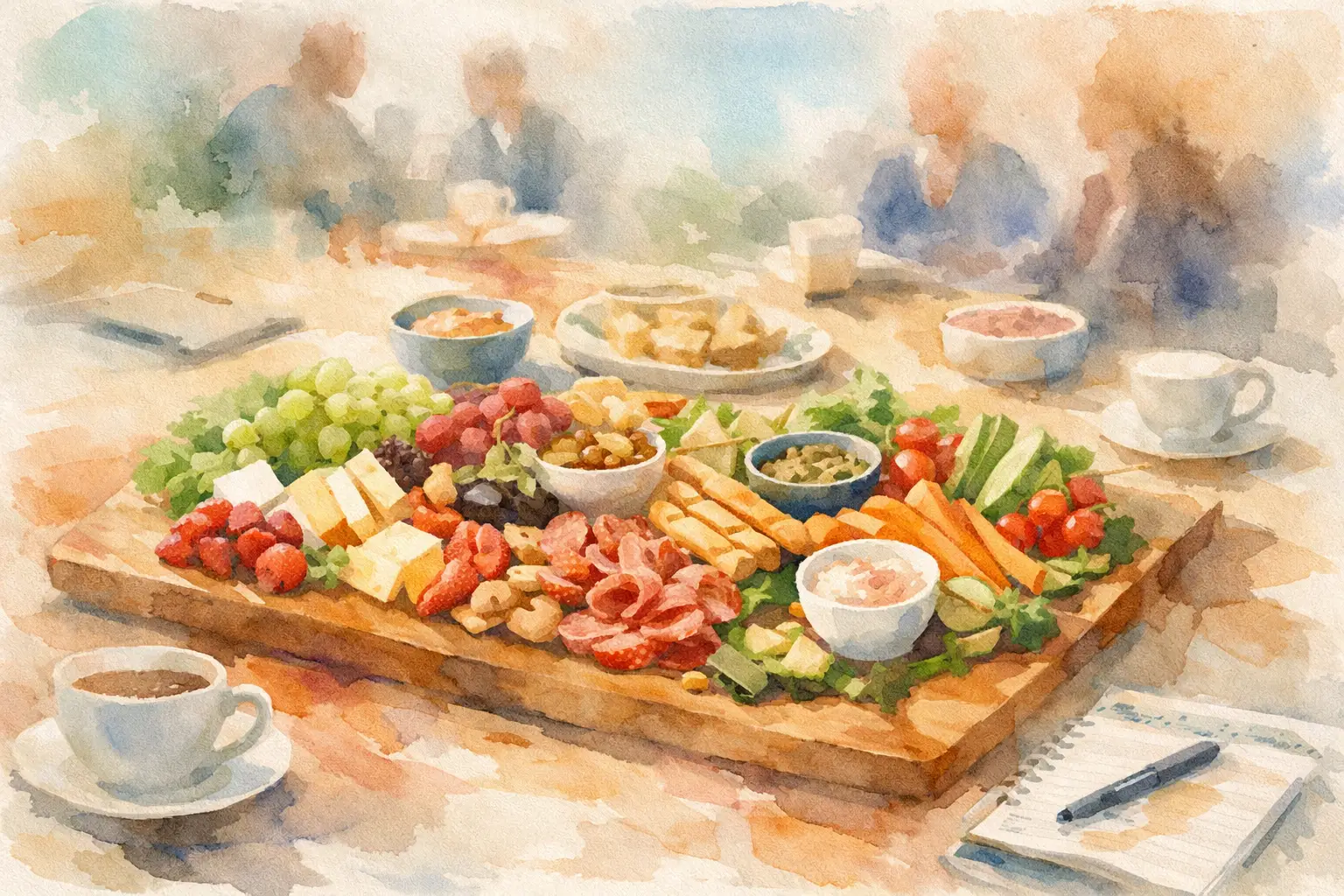
A 10am planning session can run on coffee. A workshop that stretches through lunch, a client presentation or an all-hands with people joining from different teams needs more. Sharing platters for meetings give people a reason to pause, talk and feel looked after, without turning the room into a formal sit-down meal. Done well, they are generous, easy to eat and far removed from the predictable corporate sandwich spread.
The difference is not simply putting more food on the table. It is choosing food that suits the purpose of the meeting, the people in the room and the time available. Great sharing food creates a relaxed moment around a busy agenda. Generic catering does the opposite: it distracts organisers, leaves dietary needs as an afterthought and often produces untouched trays at the end of the day.
Why sharing food works in a meeting room
Meetings are rarely just about the agenda. A new-starter session, a creative workshop or a client briefing also shapes how people feel about working with one another. Food can support that atmosphere when it feels considered rather than obligatory.
Sharing platters make the room feel less divided. Unlike individually boxed meals, they encourage a little movement and conversation, particularly before a session begins or during a natural break. They also allow people to choose their own portion and build a plate around what suits them. For teams with mixed appetites, that flexibility matters.
There is a practical advantage too. Platters are designed to be placed in the middle of the table or on a side station, so people can help themselves without a lengthy distribution process. That makes them a strong choice for meetings where timing is tight and every minute counts.
The trade-off is that sharing food needs a little more thought around set-up, serving space and dietary separation. If everyone must eat at their desk in a short gap, boxed meals may be the better fit. But where there is room to gather, platters bring warmth without adding formality.
Choose sharing platters for the meeting you are hosting
A useful starting point is to match the food to the meeting format, rather than ordering the same spread every time. The best option depends on whether guests are expected to eat while working, take a proper break or circulate around the room.
For morning meetings: keep it light but worthwhile
Breakfast platters work best when they offer more than pastries alone. Think fresh fruit, yoghurt pots, granola, baked goods and savoury breakfast bites, with good coffee alongside. A lighter selection helps people settle in without the post-breakfast slump, while still making an early meeting feel like an occasion.
For a board meeting or visiting clients, presentation matters as much as variety. Neatly arranged fruit, quality viennoiserie and carefully made savoury options look polished on the table and are easy to serve between introductions.
For working lunches: build a proper spread
Lunch sharing platters should give people choice without requiring a knife-and-fork balancing act over a laptop. Wraps, filled focaccia, seasonal salads, colourful grain dishes, skewers and substantial vegetarian dishes are all reliable formats. The goal is food that travels well, looks generous and remains enjoyable during a meeting break.
Avoid relying on one type of sandwich with a token vegetarian alternative. A stronger spread gives vegetarian and vegan guests proper options, not a compromise, while offering familiar choices for those who want something straightforward. Independent Makers are particularly good at bringing personality to this kind of menu, whether that means Middle Eastern mezze, vibrant Mediterranean salads or carefully spiced South Asian dishes.
For workshops and longer sessions: plan for energy
A three-hour workshop needs more than one delivery at noon. Consider a breakfast arrival, lunch platters and an afternoon refresh with fruit, sweet treats or savoury bites. This is not about over-ordering. It is about keeping the room focused and preventing people from disappearing in search of snacks just when the session needs momentum.
For full-day sessions, choose lunch dishes that feel satisfying without being overly heavy. Fresh salads, protein-rich dishes and a balanced mix of savoury items tend to work better than a table dominated by beige buffet food. No bland food, no sleepy afternoon room.
For client meetings: make the food part of the welcome
When clients are visiting, food quietly communicates how your business operates. Sharing platters are a good middle ground: more welcoming than a tea and biscuit, less distracting than a plated lunch. Choose a menu that feels polished and easy to enjoy while conversations continue.
It is worth checking dietary requirements before the day, rather than asking guests to identify themselves in the room. Clearly labelled dishes and separate portions for specific allergens help everyone eat confidently. It is a small detail, but it signals thoughtful hospitality.
How much food should you order?
The right quantity depends on timing, duration and what else is being served. A mid-morning platter is a supplement to breakfast. A lunchtime platter needs to stand on its own. A late-afternoon selection can be smaller, particularly if colleagues are heading to dinner afterwards.
Start with the number of confirmed attendees, then account for the meeting context. A hands-on workshop typically creates bigger appetites than a short presentation. A lunch served at 1.30pm may need a little more coverage than one served at midday. If guests are travelling in, food is often more welcome than you expect.
It also helps to avoid treating every dietary preference as an add-on. Build inclusivity into the core menu, then arrange separately packaged items where required for allergies or strict dietary needs. This reduces waste and means nobody is left with the least interesting thing on the table.
A dependable catering partner should make portions and menu mix clear before you order. Fixed pricing and straightforward guidance remove the guesswork, especially when you are arranging food for a larger group or coordinating several office events at once.
The details that make platters feel effortless
Good food is only half the job. The meeting experience is shaped by what happens around delivery, set-up and clearing away. Order for a defined delivery window, allowing enough time to lay food out before guests arrive. A platter landing in reception halfway through the first presentation is not a minor inconvenience.
Check the room before you confirm the menu. Is there enough table space? Will food be served in the meeting room or in a breakout area? Do you need plates, napkins, cutlery and serving utensils? Cold platters are often simplest for a busy office, but warm sharing dishes can work beautifully when delivery timing and serving arrangements are properly managed.
Labels are essential. Guests should be able to see what they are choosing, including allergens and dietary suitability, without having to ask the organiser. Keep drinks close by as well. Still and sparkling water, good coffee and a few soft drink choices are usually more useful than an elaborate drinks list during a working session.
At &Dine, this is where maker-led food meets corporate-grade reliability: independent kitchens preparing food with real character, supported by clear ordering, defined delivery windows and practical help when the event needs more coordination.
Move beyond the standard office platter
The most memorable meeting food has a point of view. It might be a table of colourful mezze with warm flatbreads, a seasonal British spread with excellent salads and savoury tarts, or a selection built around a Maker's family recipes. The food does not need to be complicated. It simply needs to feel like someone chose it.
That matters for workplace culture. Teams notice when lunch is always an afterthought, and they notice when an organiser has made room for different tastes and needs. Sharing food is one of the simplest ways to make a routine gathering more human, whether you are welcoming a new colleague, bringing remote teams together or thanking people after a demanding project.
For your next meeting, start with the moment you want to create. Then choose platters that give people enough to enjoy, a reason to gather and the confidence that everything will arrive on time, tasting great.