
Self-Serve Versus Managed Catering for Offices
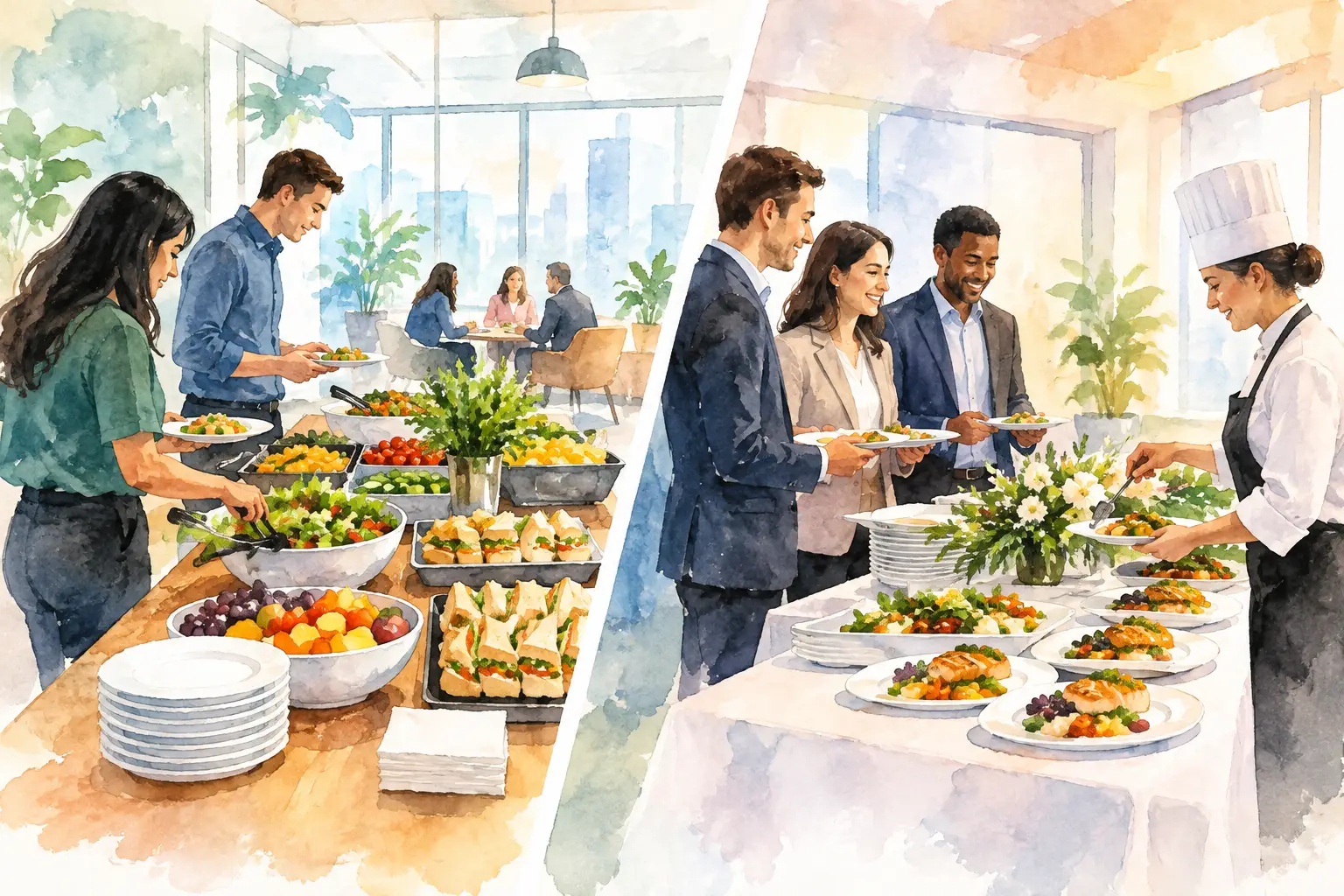
A team lunch for 12 and a client event for 120 should not be ordered in the same way. That is the real question behind self-serve versus managed catering: not which model is universally better, but which gives your workplace the right level of choice, reassurance and hands-on support for the occasion.
For an office manager arranging an ad-hoc Friday lunch, speed matters. For an executive assistant planning a board dinner, a delayed delivery or missed dietary requirement can derail the whole event. The best catering setup meets the moment, without forcing every order through a long process or leaving a busy organiser to coordinate everything alone.
What self-serve catering looks like
Self-serve catering puts the organiser in control of the order. You browse menus, select food, confirm quantities, enter delivery details and pay or raise an invoice through one online system. It is designed for straightforward occasions where the brief is clear and the person ordering is comfortable making the decisions.
This works particularly well for regular team lunches, breakfasts, casual workshops and last-minute celebrations. You can compare cuisines, see prices upfront and place an order when it suits your schedule. There is no need to wait for a proposal for a simple drop-off lunch.
For many London offices, this flexibility is the point. A people team might order vibrant sharing platters for a creative session one week, then individually boxed lunches for a training day the next. With a good self-serve platform, that variety does not mean juggling separate suppliers, delivery terms and payment processes.
The catch is that self-serve asks the organiser to own the brief. You need to know how much food to order, whether a buffet suits the room, how to accommodate allergies safely and how much time is needed for set-up. For a smaller order, those choices are usually manageable. For a high-stakes occasion, they can become another task on an already crowded list.
When managed catering earns its place
Managed catering adds a person and a process around the food. Rather than simply choosing from a menu, you can discuss the event, guest numbers, dietary needs, timings, venue access and budget with a catering specialist or account manager. They help shape the order and oversee the practical details that do not appear in a shopping basket.
It is a strong fit for client-facing events, leadership meetings, office launches, evening receptions and recurring meal programmes. These occasions often involve moving parts: a precise delivery window, a split service across several floors, presentation expectations, changing attendance or requirements such as halal, vegan and gluten-free food that need careful planning.
Managed support also brings useful perspective. An experienced catering team can flag when a menu is too light for a lunch meeting, suggest sharing food that works for standing guests, or recommend plated dishes when the occasion calls for more polish. That advice protects both the guest experience and the budget.
This does not mean managed catering must feel formal or slow. The right service should make planning easier while keeping food interesting: restaurant-standard dishes from independent Makers, not soulless kitchens and generic trays chosen because they are easy to repeat.
There is usually more coordination involved at the start, especially for bespoke menus or larger events. But for the organiser, the overall workload is often lower. Instead of chasing confirmations and solving problems alone, they have one accountable point of contact.
Self-serve versus managed catering: the practical differences
The decision normally comes down to four things: complexity, risk, frequency and internal time.
Complexity of the brief
Choose self-serve when the brief is simple. You know the date, the headcount, the budget and the type of food people will enjoy. A lunchtime order for 20 people with a few standard dietary requests is usually a good example.
Move towards managed catering when the brief needs interpretation. Perhaps the event runs from breakfast through to drinks, senior guests are attending, food needs to be refreshed during the day, or the venue has strict loading and access rules. These are not impossible to manage yourself, but they deserve professional attention.
Budget control
Self-serve makes pricing highly visible. It is useful when you have a fixed per-head allowance and want to see exactly how menu changes affect the total. For routine workplace food, that transparency can make approvals much easier.
Managed catering is valuable when the budget needs to cover more than dishes. Delivery, service, presentation, equipment, staffing and contingencies may all need consideration. A managed partner can build a realistic proposal rather than leaving you to discover extra requirements late in the process.
Neither route automatically costs less. A self-serve order can become expensive if too much food is ordered or unsuitable items go to waste. A well-managed event can be better value when expert planning prevents duplication, last-minute changes and avoidable shortfalls.
Dietary confidence
Dietary inclusivity is part of good workplace hospitality, not an awkward add-on. Self-serve menus should make it easy to identify ingredients and select options for different preferences. For a standard lunch, clear menu information and sensible labelling may be all you need.
For an event with complex requirements, managed support offers greater reassurance. One person can check the guest list, recommend a balanced spread and make sure food is labelled and presented clearly. That matters when guests include people with serious allergies, religious dietary requirements or several overlapping preferences.
The organiser's time
Self-serve is efficient when it saves time. If ordering takes ten minutes and delivery is reliable, there is little reason to turn a familiar team lunch into a project.
Managed catering is efficient when it removes time-consuming judgement calls. If you are arranging a breakfast for investors, a three-day off-site or a summer party, saving an hour on menu browsing is not the main benefit. Saving the mental load of coordinating a memorable event is.
A flexible model is often the sensible answer
Workplace food rarely fits one neat category. The same business may need quick online ordering for a monthly all-hands lunch, then a more involved service for a client reception. Treating catering as either entirely self-serve or entirely managed can create unnecessary friction.
A flexible partner lets teams choose the level of support order by order. At &Dine, that can mean placing an ad-hoc order online when the plan is simple, working with a dedicated team on a bespoke event, or setting up recurring workplace meals with fixed pricing and dependable delivery windows. The food can still come from carefully selected independent Makers, while the ordering experience stays centralised and easy to manage.
This approach also helps organisations protect consistency as they grow. Different office teams may place their own orders, but procurement and workplace leaders still need visibility, reliable standards and a supplier setup that does not sprawl into dozens of invoices. Centralised ordering with the option of account support gives both groups something useful.
Questions to ask before you order
Before choosing a route, get specific about the occasion. Is food simply fuelling a working session, or is it helping to host people? Is the headcount stable? Does the venue create any practical complications? Would a late delivery be inconvenient, or genuinely damaging?
Also consider who will be managing the order on the day. If that person needs to welcome guests, run a meeting or handle a packed schedule, managed support can be a practical investment. If the order is familiar, low-risk and easy to receive, self-serve keeps things quick.
The strongest catering choices do not make organisers choose between good food and good logistics. Match the support to the stakes, give your team food they will actually look forward to, and leave enough room in the day for people rather than paperwork.