
Meal Delivery Versus Catering for London Offices
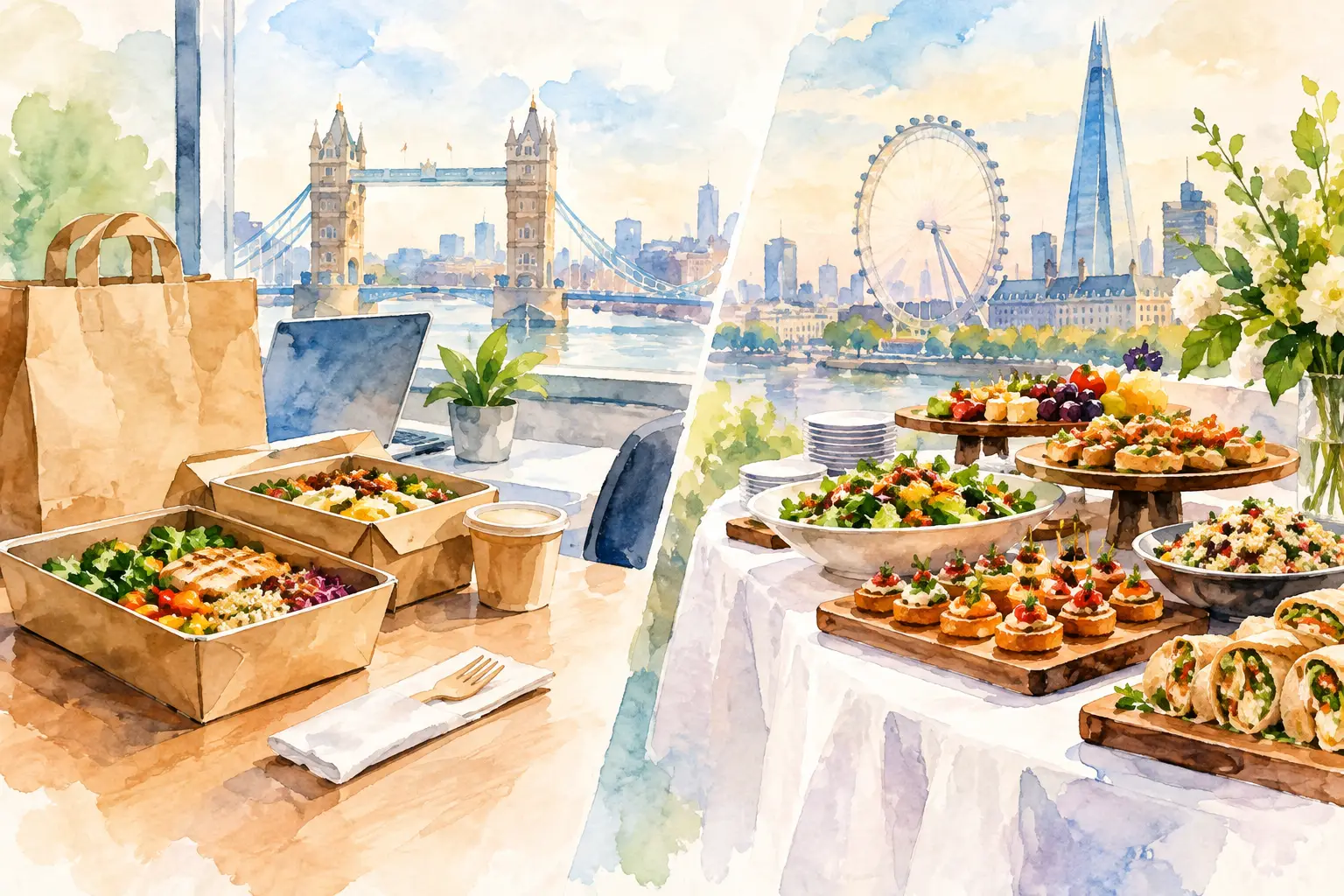
A team lunch for 12 has very different needs from a client reception for 80. Yet both are often filed under the same urgent calendar note: “sort food”. That is where the decision between meal delivery versus catering matters. One is built for straightforward, satisfying office meals; the other is designed to make an occasion feel considered, well-run and properly hosted.
Neither option is automatically better. The right choice depends on the people in the room, the purpose of the food and how much coordination the occasion requires. What should not be up for debate is the quality. Office food can be practical without being generic, and reliable without coming from soulless kitchens.
Meal delivery versus catering: what is the difference?
Meal delivery is usually the simpler format. You choose food, confirm quantities and dietary requirements, set a delivery time and have it brought to the office ready to serve. It works particularly well for team lunches, workshops, regular in-office days and informal meetings where the priority is getting everyone fed well without creating a production around lunch.
Catering is a broader service, often with more planning behind it. It may include a tailored menu, platters or buffets, equipment, serving arrangements, setup, clear-down and event-specific support. It is the better fit when food is part of the experience rather than a welcome break in the agenda.
The line can blur. A beautifully presented sharing spread may arrive ready to put on a table, while a catered breakfast may need little more than a delivery and a few labels. The useful question is not “what category does this sit in?” but “what does this occasion need us to handle?”
When meal delivery is the smarter office choice
For everyday workplace food, meal delivery keeps things moving. An office manager can order lunch for a project team without chasing multiple suppliers, arranging serving staff or trying to estimate how much equipment is needed. With clear delivery windows and fixed pricing, it is easier to plan around busy diaries and approval processes.
It is especially effective for recurring moments: a Tuesday team lunch, a monthly all-hands, a late-afternoon working session or breakfast before a training day. The best delivery options offer enough menu variety to stop repeat orders becoming repetitive, while still making the ordering process familiar and quick.
Individual boxed meals are useful when teams are eating at different times, working across several meeting rooms or managing complex dietary needs. Clearly labelled dishes remove the awkwardness of guessing which lunch is vegetarian, gluten-free or free from a particular allergen. They also make headcount changes easier to manage when people are arriving and leaving throughout the day.
Sharing food suits teams who are eating together. Think generous salads, warm mains, wraps, dips, sides and something sweet, laid out for people to choose from. It can feel more sociable than a row of identical boxes, and it gives colleagues a reason to step away from their desks at the same time.
There are trade-offs. Delivery is not always the answer for a formal client lunch or an evening event where presentation needs to hold up over several hours. If no one has time to lay out the food, manage replenishment or deal with the aftermath, a delivery-only format can put pressure back on the organiser.
When catering earns its place
Catering becomes valuable when the food needs to do more than fill a gap between meetings. A board presentation, product launch, client dinner, summer party or company celebration asks more of the host. Guests notice the flow of the event, the welcome on arrival and whether the food feels appropriate to the setting.
A catered service gives organisers more control over those details. The menu can reflect the time of day, the guest list and the tone of the event. A morning briefing may call for good coffee, pastries and fruit. A client-facing lunch might need plated dishes or a polished buffet that is easy to eat while talking. An evening gathering may work best with substantial canapés, sharing platters and food that travels well around the room.
This is also where presentation matters. A buffet should look inviting at the start of service, not like it has been unpacked in a hurry. Labels, serving utensils, dietary information and thoughtful portions all help guests feel looked after. These details are operational, but they are also part of hospitality.
Catering is usually more involved, so it needs more lead time and a clearer brief. You will want to confirm guest numbers, venue access, room layout, timings, dietary requirements, budget and whether there is space for setup. That additional planning is worthwhile when the occasion carries reputational weight. It is less worthwhile for a small internal lunch that simply needs to arrive on time and taste great.
The practical differences that affect your decision
The biggest distinction is often not the food itself. It is the amount of responsibility that stays with your team.
With meal delivery, your office may still be responsible for setting out dishes, making space in the kitchen or meeting room, and clearing packaging afterwards. For many workplace occasions, that is completely reasonable. It keeps the service efficient and the spend focused on the food.
With catering, more of that coordination can sit with the provider. That can include advising on quantities, shaping a menu around the event, arranging the setup and planning for service. For an executive assistant managing a packed event schedule, or a workplace team hosting guests while keeping the office running, that support can be the difference between calmly greeting attendees and spending the first 20 minutes looking for extra napkins.
Budget works differently too. Meal delivery is generally easier to price per person because the format is more standardised. Catering may involve minimum spends, equipment, staffing, setup or a more bespoke menu. That does not make it poor value. It simply means the value is in both the food and the reduced hosting burden.
Dietary inclusion deserves the same care in either format. A token vegan option or an unlabeled gluten-free dish is not enough. Good workplace food gives everyone a proper choice, with dishes that are clearly identified and portions that do not leave anyone picking at side salads. Independent Makers are often particularly strong here, bringing genuine regional dishes and well-developed plant-based options rather than one-size-fits-all corporate menus.
Four questions to ask before you order
If the choice still feels unclear, start with four practical questions:
- Is food the main event, or support for the event?
- Will someone in the office have time to set up and host?
- Are guests expecting a polished, client-facing experience?
- Do timings, dietary needs or room layout require a tailored plan?
If food is supporting a regular workday, delivery is often the sensible answer. If it is helping you welcome, impress or celebrate, catering is more likely to be worth the additional planning.
Use both formats to build a better workplace food programme
Many London offices do not need to choose one model forever. A flexible approach tends to work best: recurring meal delivery for the days teams are together, ad-hoc ordering for last-minute meetings, and event catering for the occasions that deserve a little more theatre.
That mix also gives workplace teams room to respond to real patterns rather than forcing every occasion into the same format. A growing team may need easy weekly lunches now, then a larger catered celebration after a funding announcement. A client meeting that starts as coffee and pastries may become a hosted lunch once the attendee list grows.
&Dine is built around that reality, bringing curated independent Makers together with the practical controls offices need: varied menus, clear pricing, dependable delivery windows and support when an event calls for more than a simple drop-off. The aim is not to make every lunch elaborate. It is to make every food decision feel easy, considered and far from bland.
The next time a meeting invite lands with “lunch provided”, pause before ordering the usual. Match the service to the moment, give guests food they will actually want to eat, and let the hosting feel as thoughtful as the work that brought everyone together.