
How to Plan Workplace Catering Teams Look Forward To
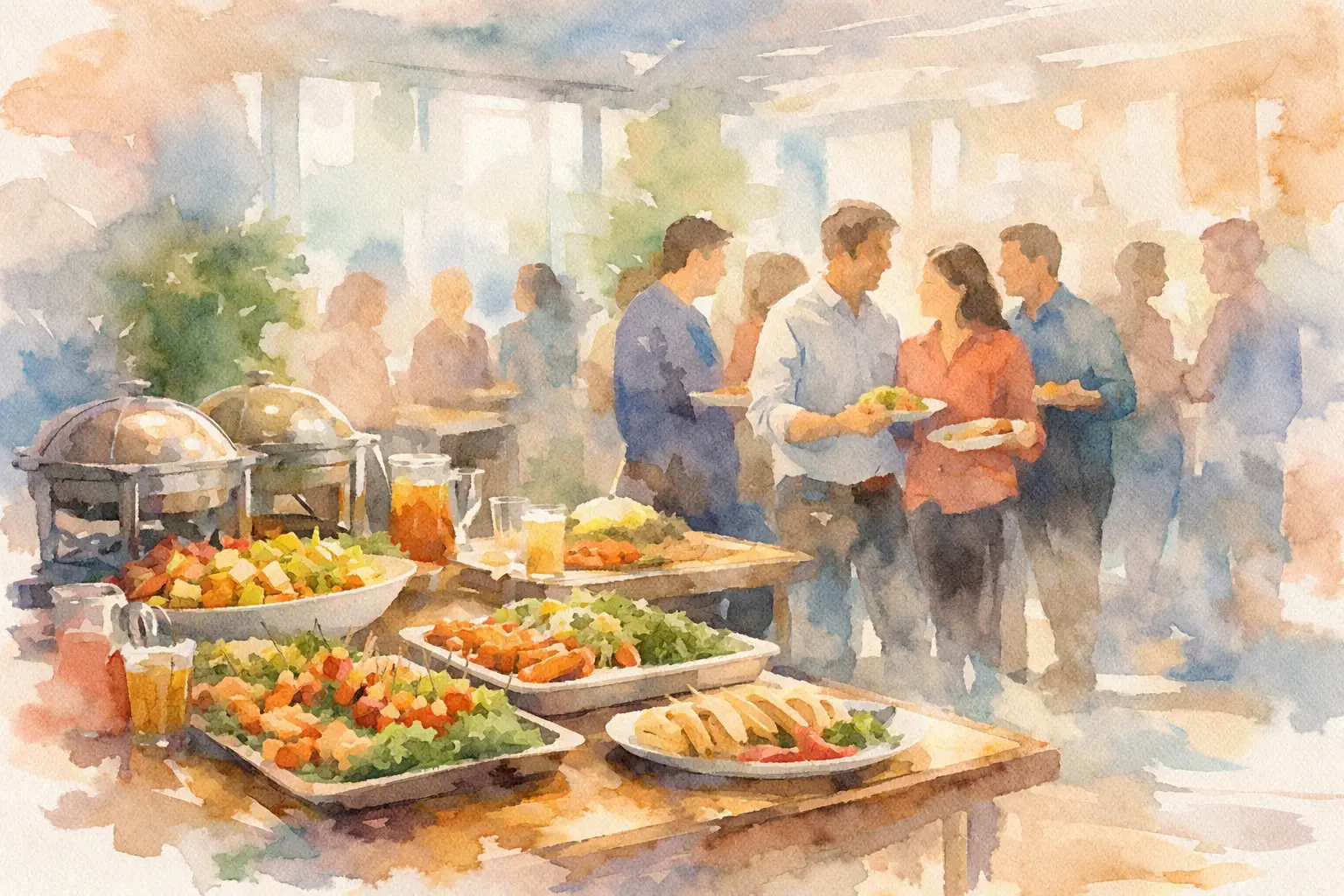
At 11.45 on a busy Tuesday, a team lunch is either about to lift the mood in the office or create a queue of disappointed people asking where the vegetarian option is. To plan workplace catering well, you need more than a headcount and a delivery postcode. You need food people genuinely want to eat, a format that suits the occasion and a delivery plan that does not leave you chasing suppliers.
For office managers, EAs and workplace teams, catering has become part of the employee experience. It can welcome new starters, bring hybrid teams together, keep an all-day workshop moving or make a client meeting feel properly considered. The best approach balances those human moments with the practical details: budget, dietary requirements, timing, access and waste.
Start with the reason people are gathering
The food should fit the working day, not interrupt it. A breakfast for a 9am leadership meeting needs to be easy to serve and eat while people settle in. A working lunch for 40 people needs enough choice to keep everyone included, without turning a meeting room into a complicated buffet operation. A summer party gives you more room for sharing platters, celebration food and dishes that encourage people to linger.
Before looking at menus, define the purpose of the occasion. Is it a regular team perk, a client-facing event, a training day or a thank-you after a major deadline? The answer helps you decide how much variety, presentation and hands-on support you need.
It also prevents a common mistake: ordering the same sandwich spread for every occasion because it feels safe. Familiar food has its place, but repetitive catering quickly becomes forgettable. No generic menus or bland food should be the standard, especially when food is meant to make people feel valued.
Plan workplace catering around the people eating it
A precise headcount is useful, but it is not the whole picture. Ask attendees about dietary needs early, then turn those answers into a menu that feels inclusive rather than separate. Someone who is vegan, gluten-free or avoiding allergens should be able to choose an appealing dish, not receive an afterthought placed to one side.
For larger groups, it helps to understand the broad mix. How many people eat meat? Are there vegetarian or vegan preferences? Does the team have particular cultural or religious requirements? Are people likely to eat at their desks, or will they have time to sit down together? A plated lunch might suit a smaller client event, while individually labelled boxed meals can work better for a fast-moving workshop.
Choice matters, but too much choice can create unnecessary cost and confusion. A well-built menu usually offers a clear range of satisfying options, with dietary dishes integrated into the main selection. Think colourful grain bowls alongside generous wraps, vibrant salads beside warm mains, or sharing platters with enough substance to count as lunch.
When selecting a caterer, ask how dietary information is collected, labelled and communicated. The food itself matters, but confidence matters too. People should know what they are eating without needing to hunt down an organiser in the middle of a meeting.
Match the format to the flow of the day
Food format changes the atmosphere as much as the menu. Breakfast pastries and fruit work for a short morning gathering. A buffet can suit a larger internal lunch where colleagues can move around and chat. Individually boxed meals offer speed, portion clarity and an easy answer for different dietary needs.
Sharing food can be particularly effective for creative teams, celebrations and less formal client occasions. It invites conversation and gives a table some energy. But it is not always the right choice. If attendees have only 30 minutes between sessions, or the room has limited space, a tidy boxed lunch may be the more thoughtful option.
Set a budget that covers the full experience
A catering budget is not just a price per head. It needs to account for the time of day, menu style, delivery, service equipment, dietary options and the level of presentation required. A simple lunch for an internal meeting will be priced differently from a plated client dinner or a fully styled office celebration.
Start with a comfortable per-person range and be clear about whether that includes drinks, sweet treats, disposables and VAT. Then decide what matters most. For some teams, spending more on restaurant-standard food is worthwhile because lunch is a regular cultural moment. For others, dependable, flexible ordering for occasional meetings is the priority.
Fixed pricing is valuable here. It makes approvals easier and reduces awkward surprises once the order has been placed. If you cater regularly, review spend over a month or quarter rather than treating every order as an isolated expense. You may find that a recurring meal plan gives your workplace better consistency and less admin than repeated last-minute orders.
There is also a waste question. Ordering too much feels generous until trays of untouched food are left in the kitchen. Ordering too little can leave latecomers without lunch. Use past attendance where possible, account for no-shows on hybrid days and ask your catering partner for realistic portion guidance. Good catering is generous, not excessive.
Make delivery logistics part of the menu decision
Even brilliant food falls flat if it arrives late, cold or without the labels and serving items you expected. Delivery should be planned as carefully as the dishes. Confirm the delivery window, reception process, building access, floor number and contact person well before the day.
London offices come with their own practical challenges: busy loading bays, restricted lift access, security desks, roadworks and meetings that begin exactly on time. A defined delivery window and a supplier used to workplace logistics can make a real difference. For an important event, arrange delivery early enough to check the order, set up the space and solve any issue before guests arrive.
Think about where the food will go once it arrives. Is there room for a buffet? Do you have enough tables, bins and serving utensils? Will hot food need to be eaten immediately? Small details such as napkins, cutlery, dietary labels and compostable packaging are easy to overlook, yet they shape how organised the whole experience feels.
Choose the right level of catering support
Not every order needs the same service. Ad-hoc online ordering is ideal when you need a great team lunch without a lengthy planning process. It gives occasional organisers flexibility and keeps ordering straightforward.
For regular office meals, a recurring workplace catering arrangement can reduce the weekly scramble. You can build menus around team preferences, establish a reliable schedule and keep pricing clear. This is particularly useful for offices using food to encourage in-person days, support team connection or provide a regular benefit.
Bespoke events need more planning. A board dinner, product launch, client reception or end-of-year celebration may require menu consultation, timing advice and a more considered presentation. In those cases, an account manager can be as valuable as the menu itself. They help translate a brief into a workable order, rather than leaving you to coordinate several kitchens and delivery details alone.
&Dine brings these options together through recurring Premium workplace meals, bespoke Events catering and flexible Order &Dine orders. The point is not to make every occasion complicated. It is to give workplaces access to independent Makers and memorable food, without sacrificing the reliability expected from a professional catering partner.
Build variety without making ordering difficult
People notice when office food reflects real variety. Rotating cuisines, seasonal ingredients and different meal formats keep recurring catering fresh. Independent food Makers can bring the character that conventional corporate catering often misses: recipes with a point of view, ingredients chosen with care and food made in kitchens run by people who care about every dish leaving the pass.
Still, variety needs a framework. Keep a record of what was ordered, what disappeared first and what generated feedback. If a particular salad is consistently left over, it may be the portion size, the delivery time or simply that the team prefers warmer lunches in winter. If a maker's sharing platters get people talking, make them part of your celebrations calendar.
Avoid changing everything at once. Keep a few reliable favourites, then introduce one or two new choices each time. That gives people confidence while ensuring lunch does not feel like the same meeting repeated every week.
Use a simple checklist before placing the order
Before you confirm, check that you have the final headcount, dietary requirements, delivery contact, building instructions, delivery window and serving plan. Make sure the budget includes every expected cost and that the menu has enough substantial food for the time of day.
For larger or higher-stakes occasions, send a short internal note telling attendees what to expect. Mention the serving time, location and whether dietary meals are labelled. That small bit of communication helps food get eaten at its best and means nobody misses out because they assumed lunch was elsewhere.
Great workplace catering does not need to be extravagant to be memorable. It needs to arrive on time, taste great and show people that their time, preferences and presence in the office have been considered.