
12 Food Ideas for Team Building That Work
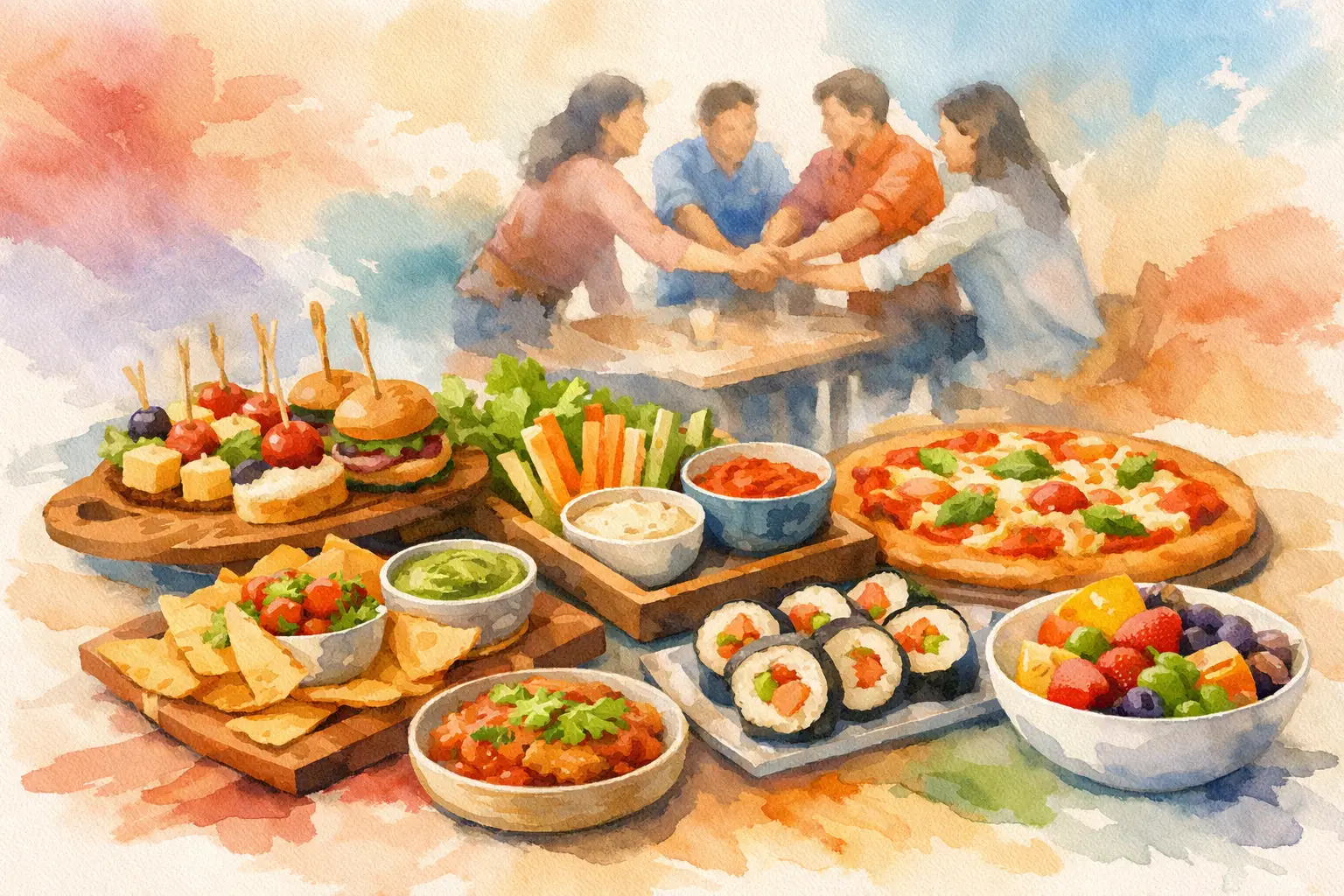
A team-building session can lose momentum quickly when the food feels like an afterthought. Dry sandwiches eaten around a meeting table rarely create conversation. The best food ideas for team building give people a reason to gather, try something new and spend time together without forcing the fun.
For London workplaces, the practical challenge is getting that experience right across different tastes, dietary requirements, schedules and budgets. Good team food should feel generous and considered, while still arriving on time and being simple to organise. Here are 12 formats that strike that balance.
Food ideas for team building that bring people together
1. Start with a proper shared breakfast
Breakfast works particularly well for away days, strategy sessions and early-morning workshops. It sets a welcoming tone before the agenda begins, and people can eat while arriving rather than losing valuable time to a formal lunch break.
Think warm pastries, fruit, yoghurt pots, breakfast buns and good coffee, with vegan and gluten-free options clearly included. A breakfast spread is sociable without demanding everyone sits down at once. It is also a smart choice for teams with a packed afternoon, when a long lunch might be unrealistic.
2. Build-your-own bowl lunches
Bowl bars give colleagues choice without creating a complicated ordering process. Start with grains or greens, then add roasted vegetables, proteins, dressings and toppings. It is colourful, substantial and easy to make inclusive for vegetarian, vegan, halal or gluten-free guests.
The team-building value comes from the shared format. People compare combinations, discover ingredients they would not normally order and avoid the familiar problem of one generic lunch trying to please everybody. Keep allergens labelled and choose a Maker that can pack components separately where needed.
3. Street-food style sharing platters
Sharing platters are one of the simplest ways to make an ordinary team lunch feel more relaxed. Think tacos, bao buns, mezze, jerk chicken, grilled vegetables, salads and vibrant sides. The food creates a natural pause in the day, without needing a host to invent an icebreaker.
This works best for teams happy to eat informally around a communal table or breakout area. Provide enough individual dietary alternatives so no one is left with a side salad, and include napkins and sensible serving portions. Great food is memorable; awkward logistics are not.
4. A themed lunch with a real point of view
A theme gives a team gathering shape, especially when you are welcoming new starters, marking a project milestone or bringing different departments together. It could be a regional Italian lunch, a Middle Eastern feast, a seasonal British menu or a celebration of a cuisine connected to your team.
The key is authenticity. Rather than choosing a vague, central-kitchen version of a theme, source food from independent specialists who know the dishes and ingredients. That means no generic menus or bland food disguised by a catchy label.
5. Hands-on pizza making
For a smaller group, pizza making is a reliable choice because it is familiar, creative and not overly formal. Teams can choose toppings, compete playfully over combinations and eat the results together. It suits a social afternoon, a client-and-team occasion or an end-of-quarter get-together.
There is a trade-off: hands-on activities need more space, time and facilitation than delivered food. If your office cannot accommodate ovens, flour and a room full of enthusiastic amateur chefs, a pizza-sharing lunch offers much of the same communal feeling with far less coordination.
6. A dumpling, taco or bao workshop
Food workshops work because everyone starts as a beginner. Folding dumplings or assembling tacos gives colleagues a low-pressure task with a clear reward at the end. Conversations happen naturally while hands are busy, which can make this more comfortable than formal networking activities.
Choose the format carefully. Dumpling making is brilliant for a group that has time to slow down; tacos and bao are easier for larger numbers and shorter sessions. Make sure the host can confidently handle dietary needs, and ask in advance whether ingredients will be prepared in an allergen-aware environment.
7. Seasonal grazing tables
A well-built grazing table is ideal for drop-in occasions: a team social, open office afternoon, launch event or a gathering where people cannot all stop at the same time. Seasonal fruit, cheeses, breads, dips, charcuterie, salads and plant-based options make the table feel abundant and welcoming.
It is not the right choice for every event. Grazing food can be harder to portion and manage around allergens, so it needs clear labels, serving utensils and enough substantial items to count as a meal. Done properly, it gives people freedom to mingle rather than queue for a plate.
8. A tasting menu from independent Makers
A tasting format brings a little curiosity to the office. Order a selection of smaller dishes from different independent kitchens - perhaps a few savoury favourites, salads, sides and a dessert course - then invite the team to vote for a favourite.
This is a good fit for workplace culture programmes because it supports discovery as well as lunch. It also avoids asking one restaurant to cover every flavour profile. For a polished experience, keep the selection focused: too many dishes can become confusing, particularly when dietary labelling is involved.
Food ideas for team building around milestones
9. Celebrate wins with a plated meal
Some moments deserve more than a buffet. A plated dinner or lunch works for senior leadership gatherings, team anniversaries, major project completions and client-facing celebrations. It signals that the occasion matters, while giving guests a calmer setting for conversation.
This format takes more planning. You need seating, service timing, menu choices and a clear plan for dietary requirements. But it can be far more effective than booking a restaurant when you want the event in your own space and need control over timings, budgets and guest numbers.
10. Afternoon tea with a modern twist
Afternoon tea has a useful advantage: it feels celebratory without taking over the working day. Pair beautiful cakes and scones with savoury bites, fresh fruit and quality tea and coffee. Add sparkling drinks if the occasion calls for it.
A modern version should go beyond the predictable. Include plant-based bakes, gluten-free options and savoury items with real flavour, so every guest has something they are pleased to eat. It is especially effective for recognition events, baby celebrations and daytime client meetings.
11. Dessert and coffee stations
A dessert station can turn a 3pm slump into a moment people actually look forward to. Brownies, cookies, doughnuts, mini tarts and fruit can be paired with barista-style coffee or a hot chocolate station. It is low-disruption and works well when lunch is already covered.
Use it as an addition rather than a substitute for a meal. Teams will appreciate the gesture most when it is genuinely inclusive, with clearly marked vegan and allergen-conscious choices. For larger offices, stagger delivery or position stations in more than one area to avoid a queue forming at the lift lobby.
12. A Friday feast that rotates each month
A recurring food ritual can do more for connection than one expensive annual event. A monthly Friday feast gives people a reason to come into the office, catch up across teams and try a different cuisine each time. Rotate between sharing lunches, bowls, comfort-food classics and celebration treats.
Consistency matters here. Fixed pricing, dependable delivery windows and an easy way to record preferences make recurring meals manageable for office managers. &Dine can bring together independent Makers and centralised workplace ordering, so the food stays varied without the organiser having to chase multiple suppliers.
How to choose the right team food format
Start with the purpose, not the menu. If the aim is a quick morale boost, a generous sharing lunch may be enough. If you want colleagues who rarely work together to interact, choose a workshop or a food station that gives them something to do. If you are hosting clients or celebrating a major achievement, a plated meal or curated tasting experience may be the better fit.
Then consider the operational details early. Ask for dietary information before finalising the menu, not after it has been ordered. Check whether the office has the space, tables and facilities for the chosen format. Confirm guest numbers, delivery windows, serving equipment and whether food needs to stay hot or chilled. These details are what make an event feel effortless to guests.
Finally, do not confuse team building with compulsory entertainment. The most successful workplace food occasions respect different personalities and schedules. Give people excellent choices, create room for informal conversation and let the food do some of the work. When it arrives on time, tastes great and feels made for the people in the room, a simple shared meal can become the part of the day your team talks about afterwards.