
Event Canapés That Make Work Events Feel Special
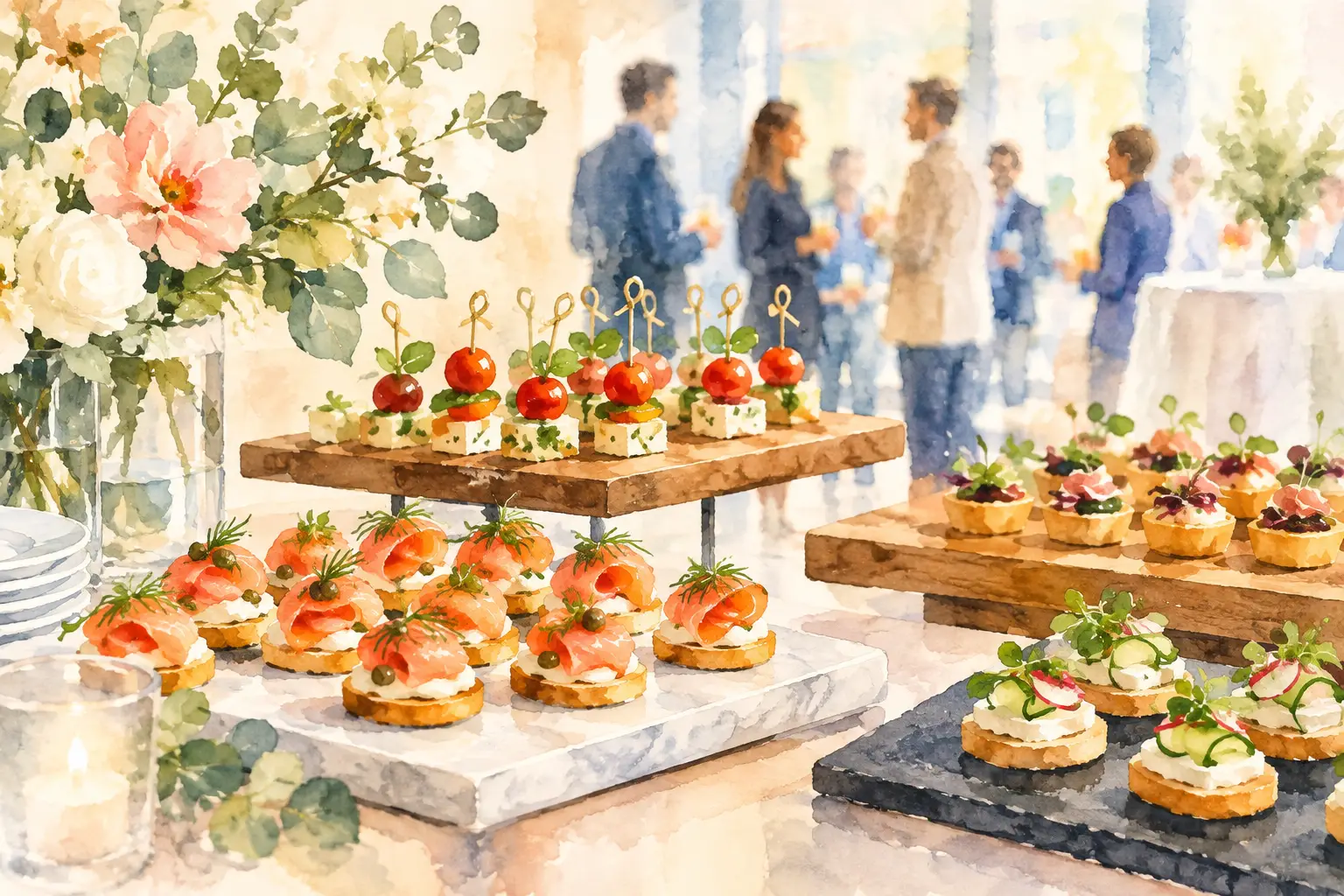
A tray of event canapés can change the energy in a room before the first speech, pitch or introduction begins. Guests have something good in hand, conversations start naturally, and an after-work gathering feels considered rather than like another meeting with a plate of biscuits. The difference is rarely about choosing the most elaborate bite. It is about serving food that suits the occasion, arrives looking fresh and gives every guest a choice they are pleased to eat.
For office managers, EAs and workplace teams, that balance matters. You need food with restaurant-standard flavour and personality, but you also need clear pricing, dependable delivery and a plan that does not leave you arranging platters while guests are arriving. Great canapés should feel easy for hosts and memorable for everyone else.
Why event canapés work so well for business occasions
Canapés are built for movement. Unlike a seated meal, they let guests circulate, meet new people and dip in and out of conversations without a formal break in the schedule. That makes them a strong choice for client receptions, product launches, networking evenings, gallery-style presentations, office celebrations and drinks after a town hall.
They also create a more generous atmosphere than crisps and a drinks table, without requiring the budget, space or staffing of a full dinner. A well-planned selection signals that the host has thought about the guest experience. It says this occasion matters, even if the event only lasts a couple of hours.
The trade-off is that canapés need closer planning than many people expect. Tiny portions do not automatically mean a simple order. Guests will notice if there is not enough food, if every option is similar, or if dietary requirements are treated as an afterthought. The best approach is to decide what role the food is playing before choosing the menu.
Match event canapés to the moment
A mid-afternoon client event and a 6.30pm drinks reception need different levels of food. If guests have recently eaten lunch and your event lasts an hour, lighter cold bites alongside a few warm options may be enough. If you are inviting people straight from work, expect the food to do more of the heavy lifting. In that case, choose more substantial canapés and consider adding sharing platters or bowls that make the spread feel like a proper evening offering.
Timing matters as much as guest numbers. An early breakfast briefing suits neat, easy-to-hold bites that do not distract from the agenda. A launch event can handle brighter, more playful choices. A senior client reception may call for polished classics alongside a few modern options with real character.
The setting should guide you too. In a busy office, food that can be eaten in one or two bites is usually the sensible choice. Avoid dishes that drip, crumble excessively or need cutlery unless there is enough table space and somewhere guests can comfortably put a glass down. A canapé can be beautifully made and still be wrong for a crowded standing reception.
Build contrast into the menu
The most successful canapé menus have variety without becoming random. Think about contrast in temperature, texture and flavour. A crisp vegetable tartlet sits well beside a soft, rich bite. A bright citrus or herb-led option can lift a menu that includes slow-cooked meat or creamy cheese. One familiar choice reassures guests, while something more distinctive gives them a talking point.
There is no need to chase novelty for its own sake. Food should feel appetising at a glance and taste even better than it looks. Independent Makers are especially valuable here because they bring the point of view of a real kitchen, not a generic central production line. That can mean regional ingredients, family recipes, inventive vegetarian dishes or a sharper sense of seasonality.
How many canapés should you order?
The right quantity depends on when the event takes place, how long it runs and whether guests are likely to arrive hungry. As a practical starting point, allow around six to eight pieces per person for a short drinks reception where food is an accompaniment. For an evening event that replaces dinner, plan closer to 12 to 15 pieces per guest, with a stronger mix of filling options.
Do not assume every guest will eat the same amount. Some will have eaten beforehand, while others will rely on the event food as their evening meal. Adding a few substantial bites protects against the latter without forcing you to over-order every item. This is also where sharing platters, grazing-style dishes or a small bowl-food element can make good commercial sense.
Build in a modest buffer when attendance is uncertain, particularly for all-company celebrations or events where guests can bring colleagues along. A reliable caterer can help shape quantities around your event format rather than simply applying a one-size-fits-all package.
Make dietary inclusion part of the menu, not an add-on
A mixed workplace needs more than one token vegan canapé tucked at the end of a tray. Vegetarian, vegan, halal-friendly, gluten-free and allergen-aware choices should be visible, appealing and available in sensible numbers. When those options look just as generous as everything else, guests do not have to ask awkward questions or feel singled out.
Start by gathering dietary information early, ideally when invitations go out. For larger events, you may not receive a perfect response rate, so it is wise to include naturally inclusive choices across the main menu. Vegetable-led canapés, clearly labelled dishes and separate presentation where necessary all help guests choose with confidence.
Allergen management needs operational care as well as good intentions. Ask how dishes are prepared, how allergens are labelled and whether separate packaging is available for guests with serious allergies. It depends on the kitchen and the requirement, but clarity before the event is far better than trying to solve a question at the serving table.
Plan for delivery, set-up and the first 20 minutes
Canapés have a short window in which they look their best. Cold items need to arrive chilled and neatly presented; hot food needs a realistic plan for keeping its temperature and texture. That is why delivery timing is part of the menu decision, not an administrative detail to leave until the end.
Confirm where the driver should go, who will receive the order and whether building access needs to be booked in. Check lift restrictions, reception procedures and the route from the entrance to the event space. In larger London offices, a delivery that arrives at the right address can still be late to the room if those details have not been shared.
Think about presentation before the food arrives. You may only need a clear table, bins nearby, napkins and a small area for drinks. But if you are serving more formal canapés, consider whether platters will be laid out for guests to help themselves or circulated around the room. Self-serve works well for relaxed office gatherings. Staffed service can feel more polished for client-facing events, particularly when the guest list is small and the food is a central part of the occasion.
At &Dine, the aim is to make that operational side feel straightforward: food from talented independent kitchens, with defined delivery windows and support that fits the scale of the event. The food should be the part guests remember, not the last-minute coordination behind it.
Choose food people can actually enjoy while networking
A canapé should earn its place on the tray. It needs to be easy to pick up, clear to eat and satisfying enough to hold its own with a drink in the other hand. Sauces should be contained, garnishes should stay put and portions should not require guests to take an enormous bite mid-conversation.
This is not an argument for bland food. Far from it. Bold flavours travel brilliantly when they are designed well: spiced fillings, charred vegetables, flaky pastry, punchy herbs, rich cheeses and slow-cooked proteins can all work beautifully in a compact format. The goal is flavour with control, not food that asks guests to perform balancing acts.
If alcohol is being served, include a few more substantial and savoury choices. Salty, textured bites tend to be especially welcome, while lighter fresh options prevent the menu from becoming too heavy. Sweet canapés can be a lovely finish, but they are usually strongest as part of a broader selection rather than the main attraction.
Give the event a food plan, not just a food order
The easiest events have a clear rhythm. Guests arrive to drinks and the first round of canapés. More substantial pieces appear once the room has filled. A final lighter or sweeter option can land later, alongside coffee or a final toast. This approach keeps the table looking replenished and avoids putting everything out too early.
Your menu should support the purpose of the event as well. For a networking evening, choose food that encourages movement. For a presentation, serve before or after the main session so wrappers and plates do not distract. For a celebration, allow a little more abundance and colour. Good workplace hospitality is not about making food the centre of attention. It is about making people feel welcome enough to give their attention to each other.
When the room is full, the agenda is moving and guests are meeting for the first time, a genuinely good bite of food does quiet but valuable work. Choose event canapés with care, give every guest something they can enjoy, and the occasion will feel warmer from the very first tray.