
Catering for Large Office Teams Without the Bland Bits
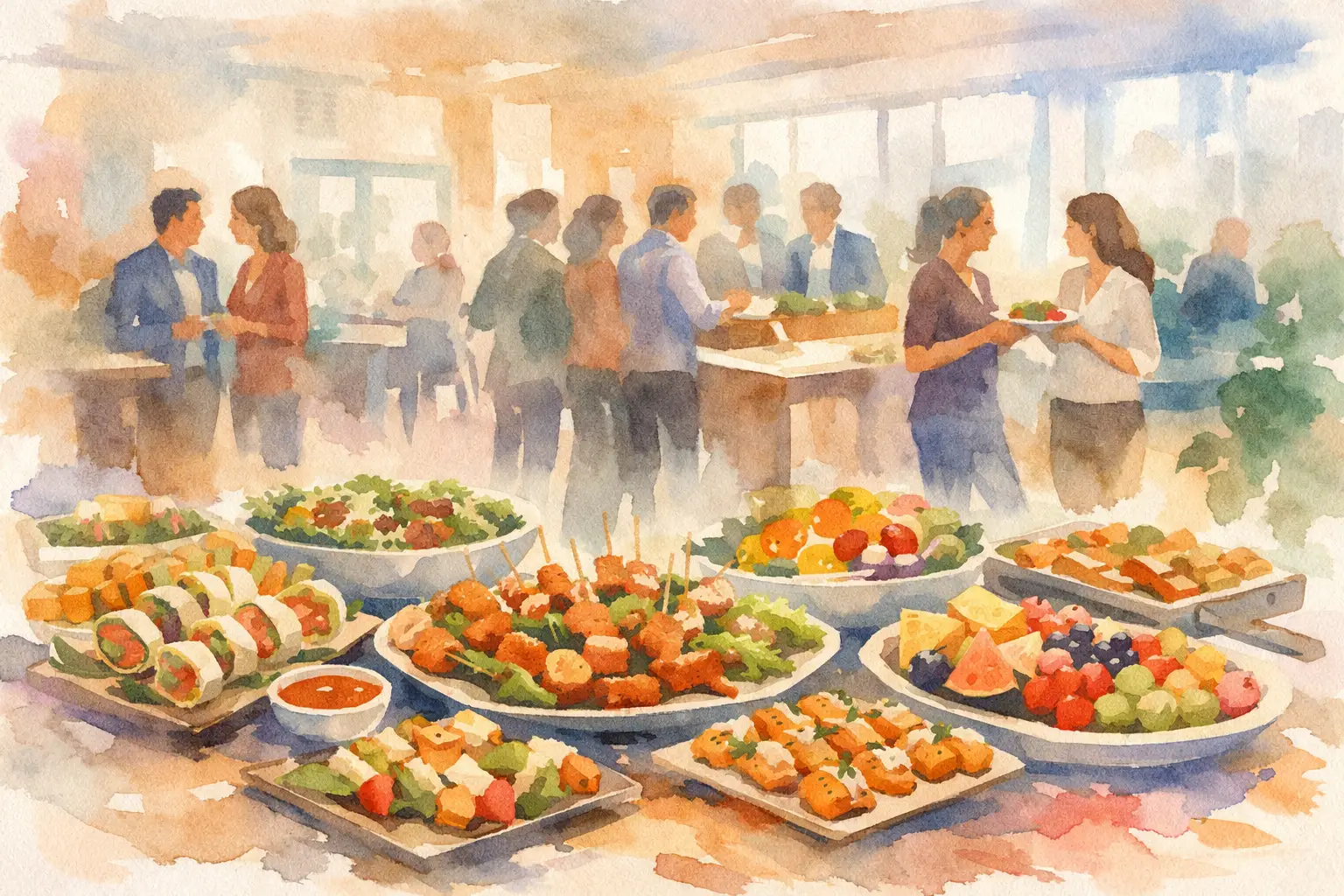
When 80 people are due in the office on the same day, lunch is no longer a quick order between meetings. Catering for large office teams means balancing different appetites, dietary requirements, budgets and working patterns, then making sure every tray arrives where it should, when it should. Get it right and food becomes one of the best parts of the working day. Get it wrong and the organiser is left fielding messages about missing lunches, cold coffee and the one vegetarian option that disappeared first.
The answer is not generic buffet food ordered in bulk. Large-team catering works best when it is planned around people, with enough structure to make the logistics easy and enough variety to make the meal worth looking forward to.
Catering for large office teams needs a proper brief
Before choosing a menu, establish what the food needs to do. A monthly all-hands lunch has different requirements from an early client workshop, a late-night product launch or a team day designed to bring colleagues back together. The headcount matters, but it is only the starting point.
Ask whether guests will be seated or eating between sessions, whether there is a fixed lunch break, and whether the food is intended to be a full meal or a lighter pick-me-up. A plated lunch can feel right for a formal leadership event, while sharing platters are better for a relaxed social occasion. Boxed meals can be the sensible choice when people need to eat at their desks or travel between buildings.
It also helps to decide what success looks like. For some workplace teams, that means a dependable recurring lunch with fixed pricing and minimal admin. For others, it means giving visitors a memorable welcome. The best catering plan is not always the most elaborate one. It is the one that fits the occasion and leaves the organiser free to focus on the people in the room.
Build a menu people can actually share
A large office team is rarely one audience. There may be committed meat eaters, vegans, colleagues avoiding gluten, people who need halal options and those who simply want something fresh rather than another sandwich. Trying to solve this with one token alternative usually creates a queue around a single dish.
Start with menus that are inclusive by design. A well-planned spread gives everyone genuine choice rather than treating dietary food as an afterthought. Think colourful grain salads, generous vegetable dishes, slow-cooked mains, bright sides and desserts that feel like part of the occasion. Clear labelling is essential, particularly around allergens, but so is making the food look equally appealing across the table.
Variety should not mean an overloaded menu. Too many individual options can make ordering difficult, increase waste and turn distribution into a scramble. For a larger lunch, a few well-chosen menu families often work better: a substantial plant-led option, a meat or fish dish where appropriate, complementary sides and a dessert or fruit finish. The exact mix depends on the team and the format, but abundance comes from thoughtful portions and range, not from ordering every item available.
Collect dietary information early
Dietary requirements are easiest to accommodate before the order is placed, not when delivery has arrived. Build a simple process for collecting needs when colleagues RSVP, especially for events. Ask about allergies separately from preferences, and confirm the final dietary count with your caterer before the agreed cut-off.
For recurring meals, keep an up-to-date record of regular requirements. This saves the same questions being asked every week and helps make sure new starters are included from their first team lunch. It is a small operational detail with a big impact on how welcome people feel.
Choose the format before you choose the food
The right delivery format protects both the food and the flow of the day. A breakfast spread may need to be ready in a meeting room before the first arrivals, with coffee, pastries and fruit arranged for easy grazing. A working lunch needs tidy portions that can be picked up quickly. An evening celebration may call for food that encourages conversation rather than sending everyone back to their desks with a fork.
Buffets and sharing platters are sociable and flexible, particularly for teams eating together. They need enough table space, serving equipment and a clear way for people to identify dishes. Boxed lunches create less congestion and give every guest certainty, but can feel less communal and require careful name or dietary labelling. Plated food gives an event a more formal finish, though it needs a firmer schedule and suitable on-site set-up.
There is no single best format for catering for large office teams. The practical choice depends on the room, the agenda and how much time people genuinely have to eat. A good catering partner will help challenge the instinct to order the same buffet for every occasion.
Treat delivery as part of the menu
Restaurant-standard food is only useful if it arrives in the right place, in great condition and at the agreed time. For a large office order, delivery is not an afterthought. It is a central part of the service.
Confirm the full address, floor, reception process, loading access and named on-site contact well in advance. In bigger buildings, allow for security desks, lift waits and the distance between reception and the meeting room. If the food is for a 12.30 pm lunch, a defined delivery window is more helpful than a vague promise that it will arrive around midday.
Think about what happens after the driver leaves, too. Who will set out the food? Are there tables, bins, serving utensils and enough space for guests to move around? Will hot food need to be eaten promptly? A few minutes of preparation can prevent a perfectly good lunch from becoming disorganised.
For recurring office meals, consistency matters as much as quality. Reliable timings, familiar ordering processes and fixed pricing make it easier to plan ahead, while changing menus keep the experience from becoming repetitive. That combination is especially valuable for office managers juggling food alongside a full calendar of workplace requests.
Keep budget control visible, not restrictive
Large headcounts can make catering costs rise quickly, particularly when last-minute additions appear. A clear per-head budget gives everyone a useful framework, but it should account for the whole requirement: food, delivery, set-up where needed and any extras such as drinks, breakfast or afternoon treats.
Ordering slightly more food than the confirmed number can be sensible for an informal drop-in lunch. For a seated event or named boxed meals, precision is usually better. The right buffer depends on attendance patterns. If your office has a history of no-shows on Fridays, catering for every RSVP may create unnecessary waste. If a team day brings people in from across London, a more generous count could be the safer call.
Avoid cutting variety simply to reach the lowest possible price. A cheaper menu that leaves half the team unable to eat properly is not good value. Instead, use the format to manage spend. Sharing dishes, seasonal ingredients and thoughtfully chosen sides can create a generous meal without paying for a collection of individually packaged extras.
Make recurring meals easier, not more repetitive
Regular food can be a powerful part of workplace culture. It gives teams a reason to step away from their screens, helps new colleagues meet people and makes office days feel considered. But only when it stays interesting.
A recurring catering programme should have a dependable rhythm without becoming predictable. Rotate cuisines, vary the balance of lighter and more substantial meals, and use feedback to learn what your team returns to. Independent Makers bring the kind of regional dishes, family recipes and ingredient-led menus that central kitchens often flatten out. That is how a regular office lunch can feel fresh without becoming difficult to manage.
This is where a managed approach earns its place. &Dine brings together food from vetted independent kitchens, rather than soulless kitchens built around generic menus, while keeping the business side straightforward. Teams can use recurring workplace meal plans for regular food moments, arrange tailored event catering for bigger occasions, or place flexible ad-hoc orders when a meeting suddenly needs feeding.
Give one person a clear role on the day
Even the best order benefits from an owner. For major office lunches and events, nominate one person to receive the delivery, check that dietary meals are present and direct the set-up. They do not need to spend the day managing catering, but they should know the plan and have the supplier contact details to hand.
If the event is high stakes, confirm the key details the working day before: final headcount, delivery window, room, access instructions and dietary requirements. This is also the moment to flag agenda changes. A lunch moved forward by 30 minutes may affect how hot dishes are served, while a meeting running over can make individual boxed meals the more practical option.
Great food for a large office is not about making the biggest order. It is about making people feel expected. Choose food with character, plan the practical details early, and give your team a meal they will still be talking about after the meeting ends.