
Buffet Versus Boxed Lunch: Which Works Best?
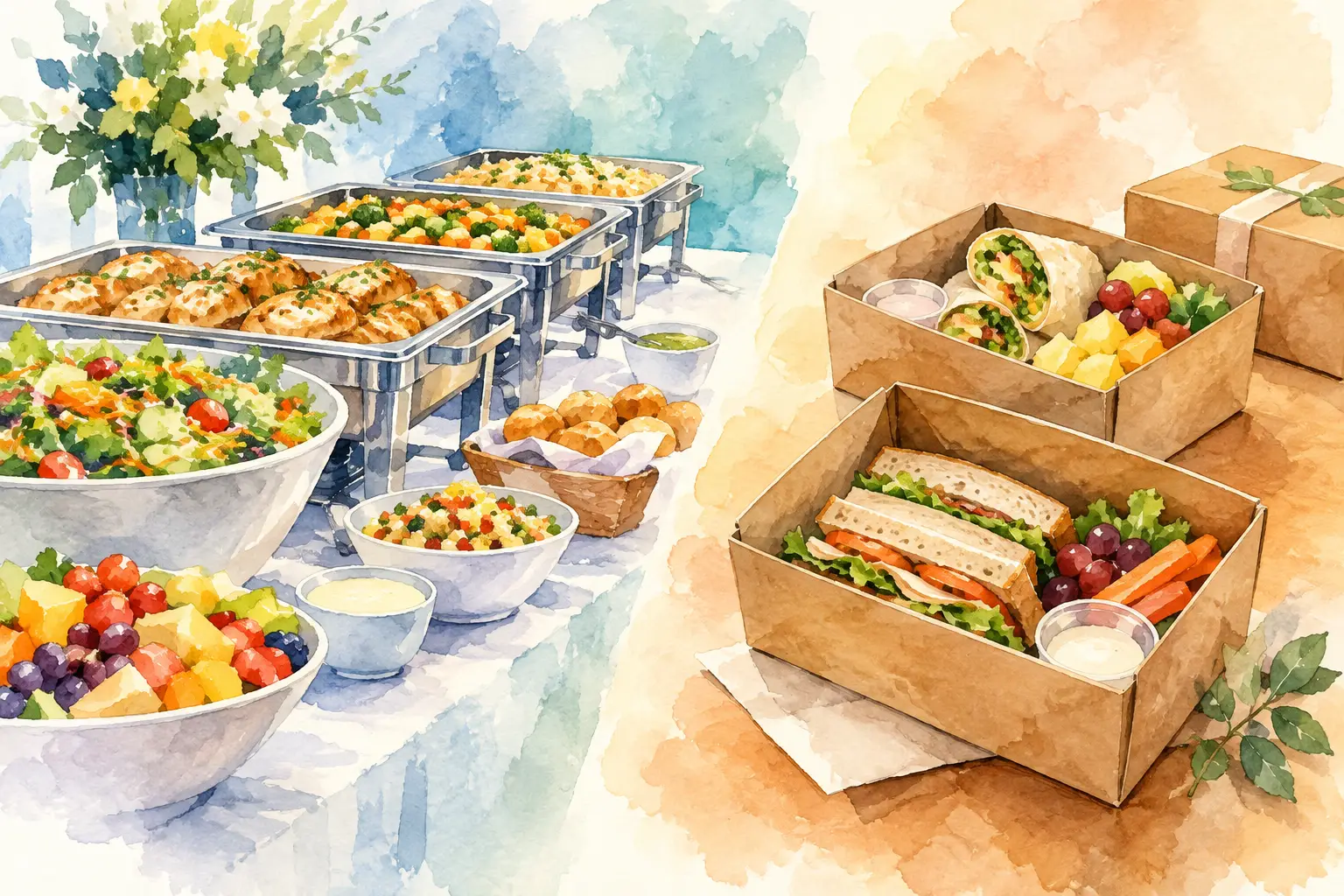
At 11.55am, a meeting runs over, three guests arrive early and someone reminds you that two colleagues are vegan. This is the moment when the buffet versus boxed lunch decision stops being a catering detail and becomes an event-planning decision.
Both formats can feed a team brilliantly. The better choice depends on what the meal needs to do: keep a workshop moving, create an easy moment of connection, impress clients, accommodate varied dietary needs or simply get everyone fed without a queue. The food matters, of course. So do the room, the agenda and the people in it.
Buffet versus boxed lunch: start with the occasion
A buffet is built for choice and shared experience. It gives people the chance to browse, serve themselves and eat a little of several things. For a team celebration, a relaxed all-hands or a lunch where conversation is part of the point, that sense of abundance can change the energy in the room.
A boxed lunch is designed for pace and clarity. Each person receives a complete meal, usually labelled with their name and dietary information, and can eat at their desk, in a meeting room or between sessions. It is often the stronger option when lunch is a short interval rather than the main event.
The first question is not, “Which is cheaper?” It is, “What needs to happen in this hour?” If people are meant to mingle, a buffet earns its place. If the diary is packed and guests need to be back in their seats at 1.30pm, boxed meals remove friction.
When a buffet makes the most sense
Buffets suit groups that will be eating together in a room with enough space to move around. Think project kick-offs, office socials, creative sessions, Friday lunches and client events where the food should feel generous rather than purely functional.
The biggest benefit is variety. A thoughtfully planned spread can offer several mains, vibrant salads, sides and something sweet, allowing different appetites and tastes to be catered for without turning lunch into a long order-taking exercise. It also works particularly well for teams with mixed food preferences. Someone may want a hearty plate; someone else may prefer a grain salad, roasted vegetables and dips.
For workplace culture, sharing food does useful work. People step away from their usual seats, speak to colleagues they do not normally see and discover the food together. That is difficult to recreate with identical individual meals. It is one reason buffet-style catering remains a favourite for larger team moments.
There are practical trade-offs. A buffet needs a suitable serving area, serving utensils and enough time for people to queue. In a 60-person office, a single narrow table can quickly become a bottleneck. Hot food also needs to arrive at the right temperature and be served within an appropriate timeframe. Good catering logistics are not glamorous, but they are what keep a great menu from becoming lukewarm and late.
Buffets can create more surplus food, too. That is not inevitable, but it is easier to over-cater when guests serve themselves. Accurate guest numbers, sensible portions and a menu shaped around the group all help to control waste.
Choose a buffet when the food is part of the experience
A buffet is usually the right call when lunch has room to breathe. If colleagues have 45 minutes or more, the space can comfortably hold a serving station and you want the meal to feel social, it offers more theatre and flexibility than individual boxes.
It is also a strong choice for people who value a restaurant-style spread over conventional corporate catering. There is no need for bland trays from a soulless kitchen. Food from independent Makers can bring regional flavours, carefully cooked proteins, bright seasonal produce and proper personality to the table.
When boxed lunches work better
Boxed lunches are made for organised days. Board meetings, training sessions, interviews, conferences, investor updates and client presentations often have a fixed schedule that cannot bend around a crowded buffet table.
Each guest receives a portioned meal, so lunch can be distributed in minutes. There is no uncertainty about whether the vegetarian option has run out, and no need for attendees to explain their allergies in front of colleagues. Clear labels make it easier to protect dietary requirements while giving people confidence in what they are eating.
This format is especially useful when people are spread across rooms or floors. A workplace coordinator can place boxes in the relevant meeting spaces rather than asking everyone to converge in one area. For hybrid events, boxed meals can also make arrivals simpler: a guest collects their lunch, finds their seat and gets on with the day.
Boxed lunches support tighter portion control and can reduce food waste, particularly when organisers collect menu choices in advance. They also make budgeting more predictable. You know how many meals are being ordered, what each one costs and which dietary alternatives are required.
The trade-off is that a box can feel less celebratory. It is a meal prepared for one person, not an invitation to gather around a table. That does not mean it has to feel generic. A well-composed box with a satisfying main, fresh sides and a good sweet treat still feels considered. The difference is in the experience, not necessarily the quality.
Choose boxed meals when timing and precision matter
If lunch needs to be on tables at 12.30pm and the next session begins at 1pm, individual meals are often the sensible choice. The same applies when guest names, dietary needs and seating plans are already known. Precision is an advantage, not a compromise.
For senior meetings, boxed lunches can also be more discreet. People can eat without interrupting a discussion or leaving the room to queue. In client-facing settings, that calm, well-organised service speaks volumes.
Cost is about more than the menu price
Comparing buffet and boxed lunch costs only by price per head can lead to the wrong decision. A buffet may have a higher minimum spend or include more food than the group will eat. Boxed lunches may require individual menu selections and more packaging. Either format can represent good value when it suits the occasion.
Consider the hidden costs of lost time. If 80 people spend 15 minutes queuing for lunch during a paid training day, that is not an insignificant operational cost. Equally, if you are hosting a team celebration and everyone eats alone at their desk, you may miss the culture benefit you were hoping to create.
The most useful approach is to set a clear brief: guest count, budget per person, service time, room layout, dietary needs and the feeling you want to create. A caterer should be able to recommend a format that works within those constraints rather than pushing a one-size-fits-all menu.
Dietary needs should shape the plan early
Whether you choose buffet or boxed, dietary inclusivity needs to be planned from the outset. London workplaces bring together a wide range of cultures, faiths, allergens and preferences. A token salad placed beside a meat-heavy spread is not a considered vegetarian option, and an unlabelled dish is not a reassuring one.
With a buffet, make sure dietary dishes are substantial, clearly labelled and positioned so that cross-contact is less likely. It helps to think beyond substitutions. A proper plant-based main should be something colleagues choose because it looks excellent, not because it is the only option available.
With boxed lunches, collect requirements early and label every meal clearly. If the group is small, individual selections may be straightforward. For bigger events, a curated set of options can keep administration manageable while still giving attendees meaningful choice.
At &Dine, that is where a curated network of independent food Makers is particularly useful: more variety for your team, without asking an office manager to coordinate multiple suppliers, delivery times and invoices.
A simple way to make the call
Picture the lunch from your guests’ point of view. Are they walking into a room where they have time to browse, chat and share plates? A buffet will likely add to the occasion. Are they arriving between presentations, taking a short break or working through a focused agenda? A labelled boxed lunch will probably serve them better.
There is also a middle ground. For some events, individual mains paired with shared salads, desserts or grazing platters offer both speed and sociability. This can work well for a leadership off-site or a client workshop: everyone gets a reliable meal, while the table still feels generous and welcoming.
The best office lunch is not defined by trays or boxes. It is defined by whether people feel looked after, the food arrives on time and the format supports the reason they are in the room. Start there, and the right choice becomes much easier to make.